
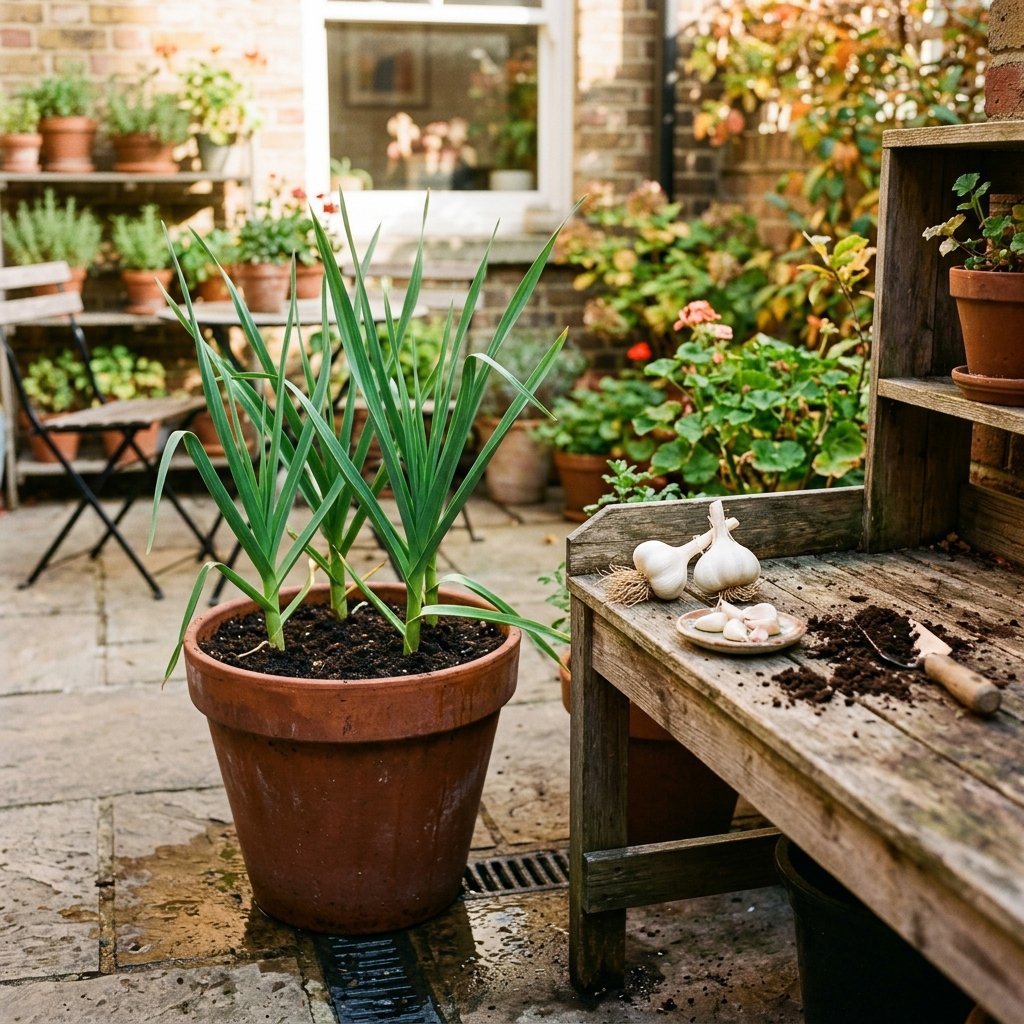
Growing garlic in containers is beginner-friendly if you treat the pot as a seasonal outdoor growing space, not as a decorative planter. You do not need a raised bed, but you do need fast drainage, enough root depth, outdoor light, and patience.
This guide was prepared without live source research for this outline, so it does not make unsupported claims about exact planting dates, yields, or variety performance. For local timing, especially on a balcony, patio, or rooftop, check your planting window with a county Extension office or a trusted local nursery before you put cloves in soil.
What You Need Before Growing Garlic in Containers
Before you set cloves in soil, understand what a container can and cannot do. Garlic grown this way still needs outdoor seasons; the pot simply gives you control over soil, drainage, and placement when you do not have a garden bed.
A garden bed acts like a large sponge with built-in insulation, buffering moisture and temperature. An outdoor container is a smaller volume of soil, so it dries faster, warms faster, chills faster, and needs more attention from you to keep conditions steady.
The simple promise: bulbs without a bed, not bulbs without seasons
Garlic is a seasonal crop, not a quick herb-style harvest. In general, you plant cloves during the cool season that fits your region, let roots establish, manage leafy growth through spring, and harvest only when the plant shows maturity.
That long arc matters because bulb formation—the stage when the underground cloves swell into a full bulb—depends on the plant moving through the season properly. Before choosing a planting week, check local guidance, such as the University of Minnesota Extension’s garlic growing guide, rather than copying a generic date.
- Use an outdoor container: garlic needs real outdoor seasonal cues, not steady indoor room conditions.
- Plan for fast drainage: excess water should leave the pot instead of sitting around the cloves.
- Expect active management: pots need more attention than beds because soil moisture and temperature swing more quickly.
- Match your timing to local climate: a balcony, patio, warm region, or cold winter can all change how the same pot behaves.
Why local timing matters more in pots
Two beginners can follow the same garlic advice and get different results because their containers sit in different microclimates. A sheltered balcony may stay warmer, while an exposed patio may freeze or dry out faster.
If your space is windy, sunny, shaded, or heat-reflective, build that into the growing plan. For a broader grounding in how pots change plant care, see What is Container Gardening? 5 Proven Benefits.
Choose a Container That Protects Roots and Drains Fast
Pots react quickly to weather and exposure, so choose a container that buffers those swings as much as possible. Match it to your space and growing conditions: deep enough for roots, wide enough for bulbs to expand, and built with real drainage holes. Since no product or review data was available for this section, let the container’s function guide the purchase rather than brand claims.
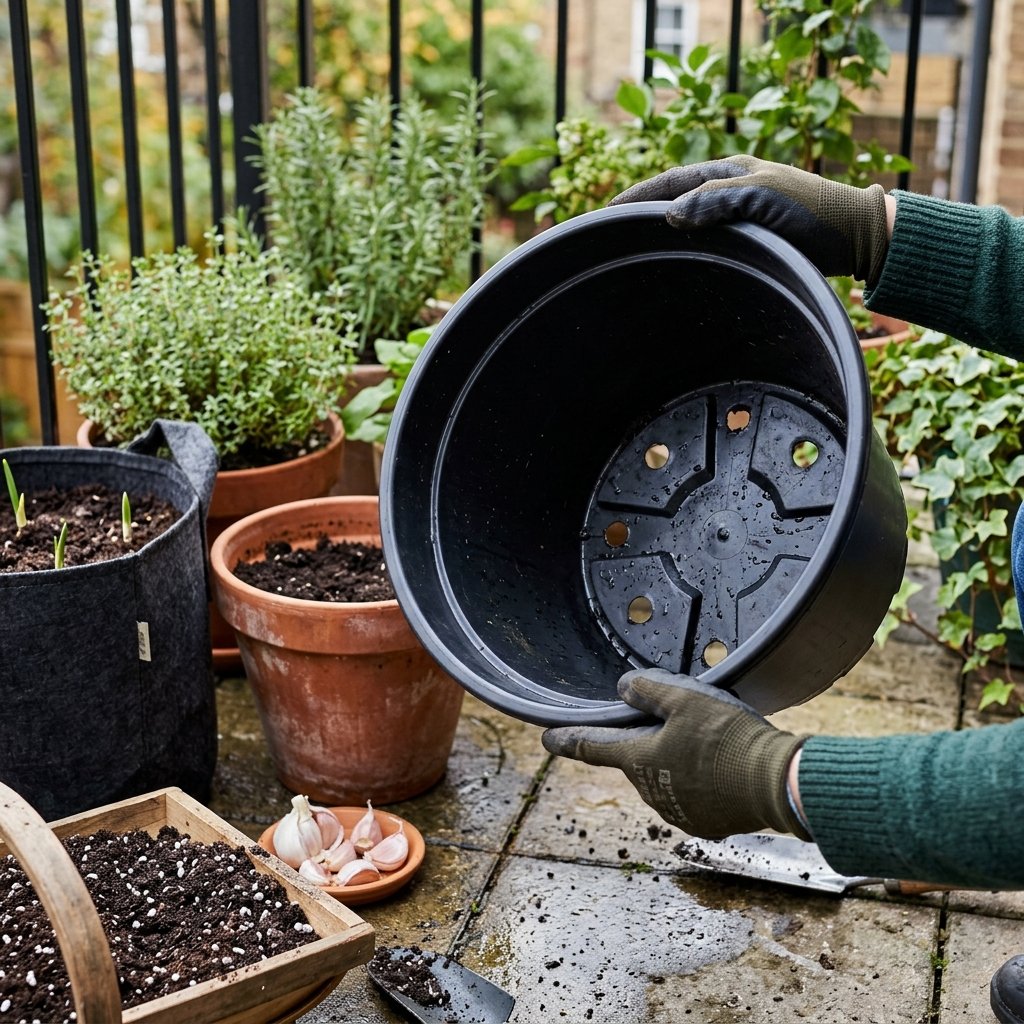
For a broader container-planning mindset, How to Choose Container Gardening: 5 Remarkable Insights is a helpful companion before you start shopping.
- Fabric grow bag: Breathes well and drains quickly, which helps prevent stale, soggy mix. It also dries faster, especially on sunny balconies.
- Plastic pot: Lightweight and easy to move. Plastic usually holds moisture longer than fabric or terracotta, which can help busy renters.
- Terracotta: Attractive and breathable, but quick to dry out. In cold, exposed spots, terracotta may also be more likely to crack.
Depth and width decide how many cloves you can plant
Container depth is the vertical root space below the planted clove. Garlic needs enough room to anchor itself, and each clove needs space around it for the bulb to size up.
Crowding is like packing too many coats into one closet. Everything fits at first, but nothing has room to expand. A wider pot lets you plant more cloves without squeezing them together. An overly large container, however, can become heavy, awkward, and difficult to reposition in a small urban space.
Before using exact clove spacing, confirm it with verified local or Extension guidance rather than guessing.
Drainage is non-negotiable
Drainage holes are actual openings in the bottom or lower sides of the container. They allow excess water to leave the potting mix. Garlic cloves left in soggy mix are more likely to fail than cloves planted in a container that drains freely.
Do not rely on a layer of rocks as a substitute for drainage holes unless you have a reliable source supporting that setup. A better choice is a container with real holes, placed where water can escape without pooling under the pot.
A renter with a sunny patio might choose a lightweight plastic tub or fabric grow bag that can be shifted as the sun changes. In a windy high-rise, weight and stability matter more so the container does not tip before the plants are established.
Set Up the Potting Mix and Plant the Cloves
Once you have a container that drains well and fits your space, fill it with a loose potting mix. Choose healthy cloves, set each one pointed end up, and water gently so the mix settles around it.
This section does not use verified local source data for exact planting depth or spacing. Confirm those measurements with a local Extension office, nursery, or seed garlic supplier before final planting.
Treat the container as a small outdoor root zone, not a bucket of dirt. Dense garden soil can compact in a pot, leaving roots with too little air. A quality potting mix holds some moisture while still leaving air pockets for root growth. A small amount of finished compost can improve the mix, but the finished blend should still feel fluffy, not muddy or heavy.
Seed garlic versus grocery garlic
Seed garlic is garlic sold specifically for planting. For beginners, it is usually the safer choice because reputable suppliers can recommend types suited to planting, storage, and your general climate pattern.
Grocery store garlic is easy to find and often inexpensive, but it comes with more uncertainty. This article does not have verified evidence showing how that garlic was handled, whether it was selected for your region, or how reliably it will grow. If your goal is a dependable harvest, start with seed garlic when you can.
A simple planting sequence beginners can follow
- Fill the container. Add potting mix to the pot, leaving enough room at the top for watering and mulch.
- Moisten dry mix. If the mix is dusty or hydrophobic, water lightly before planting so it behaves more like a wrung-out sponge.
- Separate the bulb into cloves. Break apart the garlic bulb shortly before planting. Keep the papery skin on each clove if it stays attached naturally.
- Place each clove correctly. Clove orientation means which way the clove faces. Set each clove with the pointed end up and the flatter root end down.
- Cover to the verified depth. Use locally verified planting depth and spacing guidance rather than guessing.
- Water after planting. Water gently so the mix settles around the cloves without turning soggy.
- Label the pot. Write the garlic type and planting date on a tag before you forget. The label will help you track what you planted and when.
If you have one medium patio pot, resist the urge to fill every inch with cloves. Plant fewer cloves with breathing room instead of crowding them and hoping for full bulbs. Add a light layer of mulch on top after planting if your local guidance supports it. Mulch can help the surface stay more even between waterings.
After planting, monitor moisture and weather instead of disturbing the pot. Container garlic rewards steady care, not constant checking.
Care for Container Garlic Through the Season
Steady surface moisture matters after planting. Keep the container outdoors where conditions stay as even as possible: moist but not soggy, bright during active growth, and protected from harsh exposure. A pot gives roots less buffer than a garden bed, so it can dry out, overheat, or chill more quickly.
If you are still getting comfortable with pots, What is Container Gardening? 5 Proven Benefits explains how container growing differs from planting directly in the ground.
Water by checking the mix, not the calendar
Make each watering decision by checking soil moisture, not by following a fixed weekly routine. Push a finger into the potting mix below the surface; if it is drying out, water thoroughly so moisture reaches the root zone. If the pot still feels wet, skip the watering, even if it is your usual day.
Container type and location change how often garlic needs water. A fabric bag on a windy balcony may dry faster than a plastic pot tucked beside a wall in partial shelter. In warm, breezy weather, check more often. During cool, damp stretches, let the mix breathe. Aim for damp, not swampy.
Protect the pot from extremes
Containers feel temperature swings more sharply than in-ground soil because the root area is exposed on all sides. Winter protection is mainly about reducing stress from freezing wind, hard drying, and repeated thawing, not treating the plant like an indoor houseplant.
- Move the pot to a sheltered outdoor spot if you can, such as beside a wall or under an overhang that still allows light and rain access.
- Group containers together so the pots shield one another from wind.
- Add mulch over the surface if appropriate for your climate, keeping it loose rather than packed tight.
As spring growth appears, focus again on light, moisture, and gentle feeding. Garlic usually performs best with full sun during active growth, so do not leave the pot in deep shade once shoots are growing strongly.
- Fertilizer: use a cautious, label-following approach rather than guessing at rates. If growth looks weak, a balanced container-safe fertilizer may help, but overfeeding is not a shortcut to bigger bulbs.
- Garlic scapes: hardneck types may send up curled flower stalks called garlic scapes. Many gardeners remove them so the plant keeps energy in the bulb, but timing advice varies, so follow local guidance if you have it.
- Routine checks: look for dry edges, leaning pots, blocked drainage, and weather exposure after storms or hot spells.
Know When to Harvest, Cure, and Store the Bulbs
As the season winds down, harvest garlic from containers by reading the plants, not just the calendar. Timing shifts with climate, so confirm harvest signs and curing time with a local Extension office or nursery before treating any guideline as a rule for your area.
Do not pull too early just because the tops look messy
Beginners often see yellowing leaves and assume the garlic is failing. Some leaf decline is normal near the end of the plant’s life cycle, much like a tomato plant that looks tired after carrying a heavy crop.
Watch the whole plant and the local season together. Do not harvest because of one messy leaf. If the bulb still seems small or the plant is mostly green, wait and get local guidance before lifting it.
Use this simple endgame workflow for container-grown garlic:
- Check harvest signs. Look for the plant’s overall shift from active green growth toward maturity, including some yellowing leaves. Avoid exact rules unless they have been locally verified.
- Loosen the potting mix. Slide a hand tool or gloved fingers into the mix beside the bulb. Lift gently rather than yanking hard on the stem.
- Begin drying. Let soil dry on the outer skins first, then brush off loose excess mix. Do not wash bulbs you plan to store.
- Cure if you want storage. Curing garlic means drying the bulbs in a dry, airy, shaded place so the outer layers can firm up for keeping.
- Use fresh garlic sooner if needed. If your apartment or balcony cannot provide a dry, ventilated curing spot, treat the crop as fresh garlic and cook with it earlier.
A renter with no shed can still cure a small crop on a protected, shaded shelf or rack. The essentials are good airflow and a spot that stays dry. Good storage starts with dry bulbs, gentle handling, and waiting until they no longer feel damp before packing them away.
Common Beginner Problems and How to Think Through Them
Long before bulbs reach the drying rack, most container problems show up as visible clues. When growing garlic in containers, start with what you can see: no sprouts, yellow leaves, a sour wet pot, damaged foliage, or small bulbs. Use these as practical checks rather than firm diagnoses, since local conditions and planting stock can change the answer.
| What you see | Likely line of reasoning | Next thing to check |
|---|---|---|
| No sprouts | The clove may be slow, planted at the wrong local time, too wet, too dry, or from poor planting stock. | Gently check moisture below the surface and confirm the pot is outdoors in suitable seasonal conditions. |
| Yellow leaves early | Yellow leaves can point to stress, especially uneven watering, low light, or a root zone that stays too wet. | Check drainage holes, pot placement, and whether the mix feels soggy rather than lightly damp. |
| Rot smell or wet mix | Rot risk rises when roots sit in stale, waterlogged mix. Think of it like wet shoes that never dry. | Move the pot out of puddling rain, clear blocked drainage, and water less often. |
| Leaves are chewed or damaged | Pests may be involved, but damaged leaves can also come from wind, pets, or balcony traffic. | Inspect the plant closely before treating anything, and avoid guessing at a named pest. |
Small bulbs are usually a clue, not a mystery
Small bulbs give you feedback for the next planting. They are not proof that you failed. Work through the limits one by one. The container may have offered too little root space, or the cloves may have gone in too late for your climate. The patio spot may have been too shaded, or watering may have swung between dry and soaked.
Planting stock quality also matters. If the starting cloves were poorly adapted or weak, the final bulbs may stay modest even with decent care. For broader container habits, compare the same basics you would use for other patio crops: watering, soil volume, patio placement, and the needs of vegetables such as tomatoes, potatoes, lettuce, strawberries, cucumbers, zucchini, or balcony vegetable gardens.
Conclusion
Growing garlic in containers is realistic for beginners if you cover the basics: a pot with good drainage, a loose growing mix, healthy cloves, outdoor light, steady moisture, and enough time for the crop to finish. With those pieces in place, even a small patio can produce real bulbs.
From there, the best advice is local. Check your planting window and spacing with a reliable source for your area, since climates and balcony microclimates can differ sharply. Start by choosing the container, confirming your timing, and planting fewer cloves well rather than crowding the pot.