
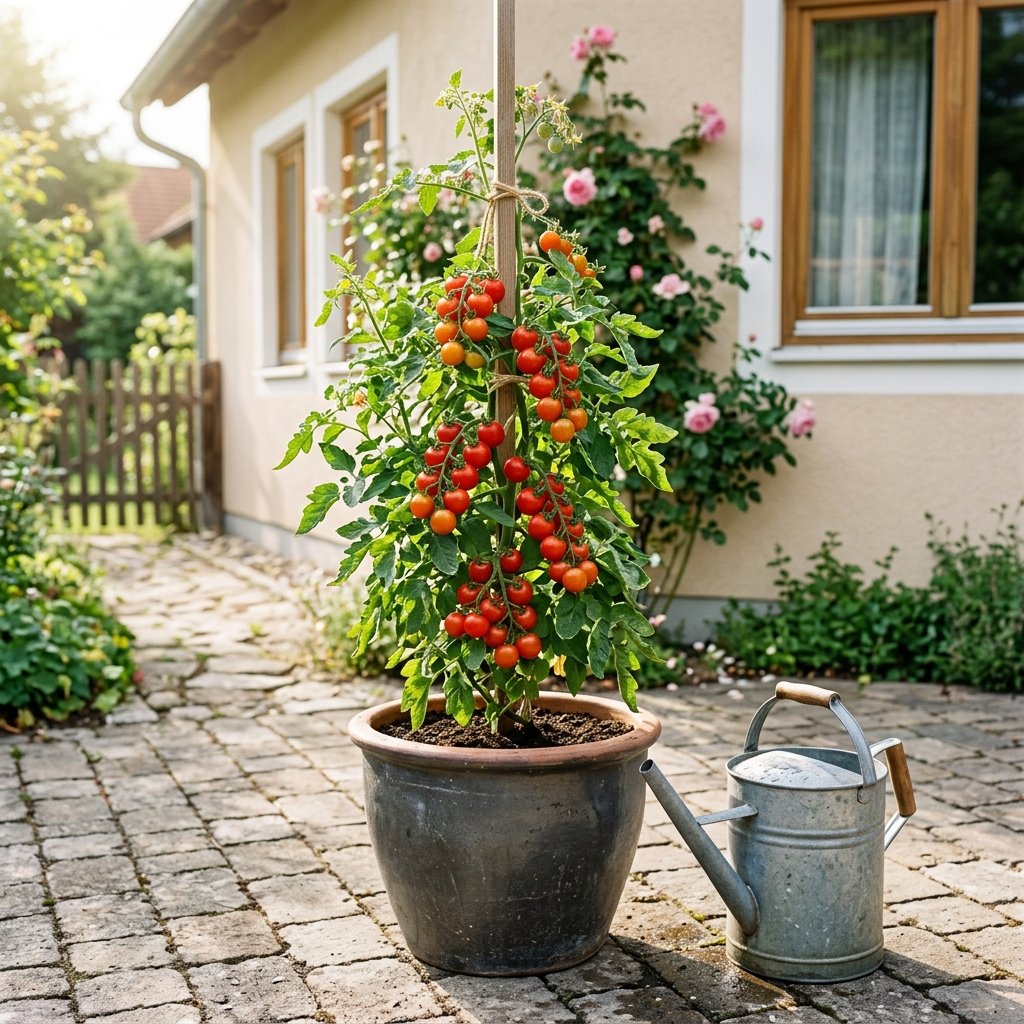
Growing cherry tomatoes in containers lets beginners turn a sunny patio, balcony, front step, or small paved corner into a practical harvest spot. You do not need a garden bed; a well-placed pot can put a productive plant where space and sunlight overlap. Related: Growing Tomatoes in Containers Gives Beginners a Head Start in Small Spaces.
This guide avoids unsupported statistics and focuses on choices you can judge at home: sunlight, container size, drainage, support, watering, and easy access for picking.
With a few visible, practical decisions, container tomatoes become much easier to manage in a small urban garden.
Growing Cherry Tomatoes in Containers: One Productive Plant Where a Garden Bed Won’t Fit
Containers earn their keep through simple, visible advantages. One sunny spot can become usable tomato-growing space, even without room for a garden bed. For small-space gardening, that is the practical gain: the plant can sit where the light and access are best, not where the soil happens to be.
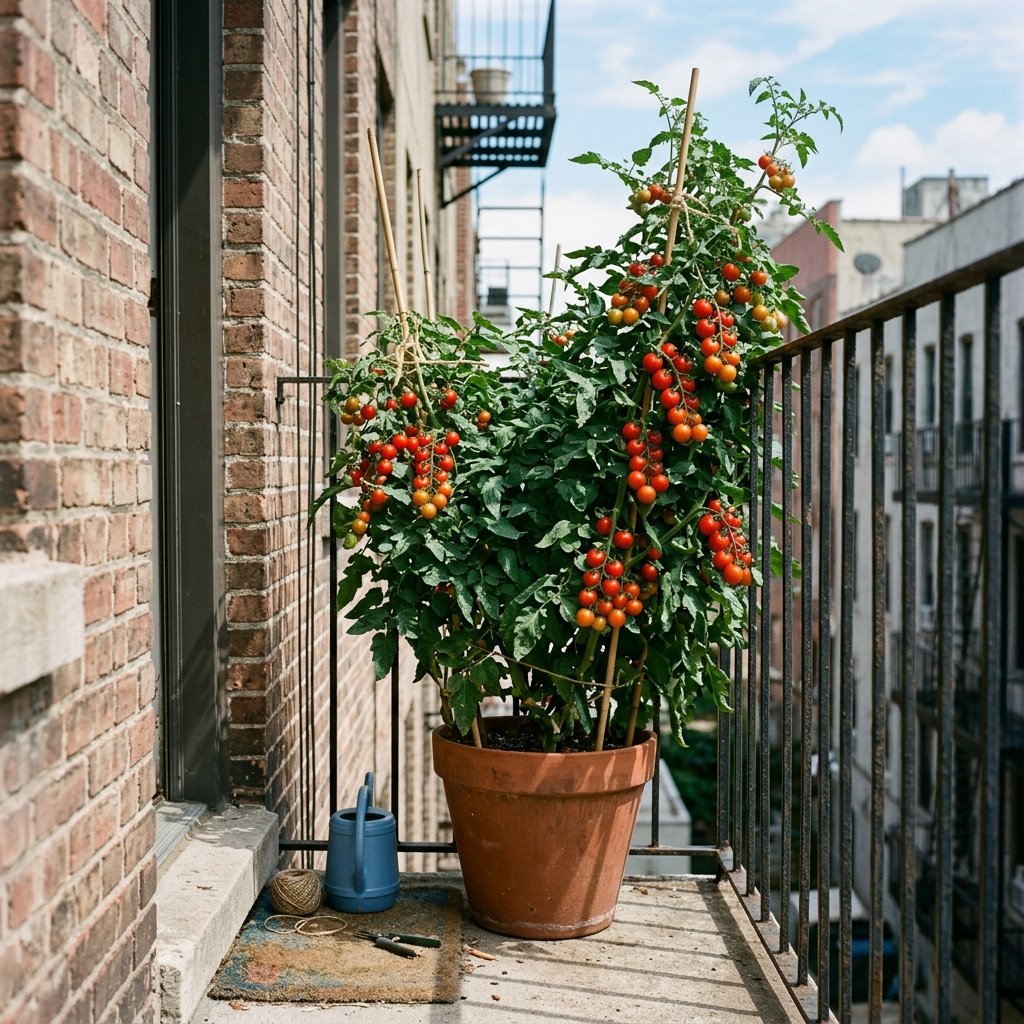
Treat the pot as a movable mini garden bed. An in-ground bed needs open ground in the right place. A container can work on a balcony garden, a porch step, the edge of a driveway, or another renter-friendly outdoor area.
- In-ground bed: useful if the available soil is sunny, reachable, and not already taken up by paving, lawn, or shared space.
- Container: useful when the best growing area is a compact growing area with a hard surface underfoot.
Containers do not make tomato plants more productive on their own. They help most when they offer better light, a controlled potting mix, easier watering, and easier harvesting than the ground space you actually have. If you want a broader container setup guide beyond patio tomatoes, the Organic Urban Garden approach is a helpful next step.
Why cherry tomatoes are a beginner-friendly container crop
For beginners, growing cherry tomatoes in containers can be especially rewarding because the fruit is small, visible, and easy to pick in stages. Instead of waiting for one large tomato to ripen, you can watch clusters change color and harvest each fruit as it is ready.
That steady picking rhythm suits small-space gardening. You can step onto a balcony, check the plant, remove ripe fruit, and move on. For a newcomer, that quick feedback makes plant care easier to understand and easier to stick with.
Containers Let You Put the Plant Where the Sun Actually Is
Containers make cherry tomatoes easier to match with the best light in your space. Instead of planting where a garden bed happens to sit, you can place the pot where the sun actually reaches the leaves. In a small area, that flexibility can matter more than square footage.
On a patio or balcony, an “almost sunny” corner and a “surprisingly bright” spot may be only a few feet apart. A wall shadow might cover one corner by midday, while the edge near a railing stays bright longer. Movable containers let you test those spots and adjust before the plant settles in.
Use a one-day sun check before choosing the pot location
Before filling the pot, watch the space as the light moves through the day. Check it once in the morning, once around midday, and once in late afternoon. Note where the brightest, longest-lasting light falls.
Also watch how shadows from railings, neighboring buildings, fences, or roof overhangs move across the area.
This shows you the microclimate: the small climate around your plant. A pot beside a hot wall may get strong light, but it may also catch too much reflected heat. If the leaves wilt there, try afternoon shade or move the container away from the surface.
- If the pot would sit under an overhang, move it nearer a railing where open sky reaches the leaves.
- If a wall shadow covers the plant early, slide the container a few feet into the brighter path.
- If paving or walls make the leaves flag in harsh heat, test a spot with morning sun and some afternoon shade.
- If you grow other fruiting plants nearby, use the same observation habit described in Ways Growing Strawberries in Containers Helps You Control for soil and placement.
The Pot, Mix, and Drainage Decide Whether the Roots Can Keep Up
Once the plant has enough light, the container has to support what happens below the surface. Cherry tomatoes in pots need enough roots to keep steady growth going. That starts with root space—room for roots to spread through the growing medium—plus a way for extra water to escape.
Choose a sturdy container with real drainage holes, a quality potting mix, and enough container depth to hold moisture without staying soggy. Heavy yard soil often performs poorly in pots because it can compact or drain badly, leaving roots short on air. The pot works like a lunchbox for roots: it has to hold enough, but it cannot seal everything in.
- Do: check for drainage holes before planting, not after the first watering.
- Do: choose a pot that feels stable and is less likely to tip in wind.
- Do: use potting mix rather than dense soil dug from the yard.
- Don’t: leave a saucer full of water under the pot; empty standing water so the mix can drain.
If you want exact gallon-size advice, verify it with a reliable source before adding it to your planting plan. The same root-zone thinking applies to other container crops, including growing carrots in containers or potatoes in containers.
Avoid the two beginner extremes: tiny pots and soggy pots
A very small container can dry quickly and restrict root space, especially once the plant is leafy and fruiting. At the other extreme, a decorative pot with no holes can create waterlogged soil, meaning the mix stays too wet for too long.
Both extremes slow the plant down. Too little mix gives roots a small “pantry,” while poor drainage turns that pantry into a puddle. Watch for lightweight pots that blow over and cachepots—pretty outer pots—that can hide standing water inside.
Add support before the plant sprawls
Add support while the plant is still easy to handle. Stakes, cages, or other simple supports are much easier to place early than after stems become heavy, tangled, and leaning across the balcony path.
You do not need a perfect product. You need to keep stems upright, make fruit easier to reach, and stop the plant from taking over walking space. If you use a self-watering container, still check that the support is secure and the overflow can drain freely.
Growing Up Instead of Out Makes Harvesting Easier in Tight Spaces
With secure support, containers let small-space gardeners manage plant shape as well as plant location. A cherry tomato trained onto vertical support grows upward instead of sprawling across a balcony, patio, or narrow side path.
Vertical support is anything that holds stems upright, such as a tomato cage, stake, or trellis. A trellis is a frame or panel that stems can be tied to or guided along, much like a ladder for the plant.
Think in reachable zones, not just square feet
Good plant spacing in a container garden leaves room for your hands, not just the pot. A plant tucked into an unreachable corner may technically fit, but watering, checking for problems, and harvesting all become harder.
Set the pot where you can reach all sides, or where you can at least rotate the container without scraping branches against a wall. That small habit improves harvest access: ripe clusters are easier to see, pick before they soften, and reach without snapping stems in tangled growth.
Simple setups work well. Place a tomato cage near a balcony railing, with enough walkway clearance that people do not brush the plant every time they pass. Or use one sturdy stake and tie the main stem loosely with soft plant ties, leaving space for the stem to thicken.
- Turn the pot occasionally so hidden fruit clusters face outward for inspection.
- Keep ties loose enough that they guide the stem rather than pinch it.
- Trim or redirect wayward stems if they block a chair, door, or walking route.
Training the plant upward may also improve airflow around crowded leaves, especially on enclosed patios, though this section is not relying on disease-prevention data. The everyday advantage is visibility: tomatoes you can see are tomatoes you can pick.
The same small-space logic applies to other crops too; Reasons Growing Peppers in Containers Makes Pest and Weather Control Easier looks at how containers can make plant care more manageable.
Containers Make Watering and Feeding More Visible, but Less Forgiving
That same manageability is one reason containers work well for tomatoes in small spaces. For growing cherry tomatoes in containers, the trade-off is simple: you can spot dry container soil, yellowing leaves, and slowed growth quickly. Still, a pot can shift from “fine” to “thirsty” faster than a garden bed.
This visibility helps beginners. A balcony plant is close enough to check while you drink coffee, take out recycling, or step outside after work. The catch is that wind, sun, and warm paving can increase plant stress, especially during hot, breezy weather. After a cloudy stretch, the same plant may need less attention.
A simple moisture check beats a fixed calendar
A watering routine should start with a moisture check, not a date on the calendar. “Moisture check” just means using your senses before adding water, much like checking whether a sponge feels damp before soaking it again.
- Press a finger into the potting mix near the stem, without disturbing the roots.
- Notice whether the upper mix feels dry, damp, or soggy.
- Look at the plant: brief afternoon droop in heat is different from wilted leaves that do not perk up later.
- Watch what happens when you water. If water runs straight through very fast, the mix may be overly dry or pulling away from the pot edge.
A thin layer of mulch on top of the mix can help slow surface drying, while still letting you check underneath it. Mulch means a loose covering, such as clean straw or another suitable pot-safe material, placed over the soil surface.
Feeding works the same way: observe first, then act. Container nutrients can run low over time. This section does not have product-specific data to support exact fertilizer rates, so follow the fertilizer label for container vegetables rather than guessing.
| What you notice | What it may mean | Beginner-friendly response |
|---|---|---|
| Mix feels dry and plant stays wilted | The pot may need water | Water thoroughly, then recheck later |
| Water rushes out immediately | Dry mix may not be absorbing evenly | Water slowly in rounds |
| Leaves pale over time | Nutrients may be running low | Use fertilizer according to its label |
If you enjoy this kind of small-space crop care, the same container mindset also applies to bulbs. For another example, see Growing Garlic in Containers: Fresh Bulbs Without a Garden Bed.
A Beginner Setup That Keeps the Plant Productive Without Taking Over
Once support, watering, and feeding are covered, keep the starter setup simple. Place one healthy cherry tomato plant in the sunniest practical spot, use a sturdy pot with drainage, add support early, and check the plant often. This section does not rely on verified trial data, so it does not promise a specific harvest amount. The aim is a compact container setup that stays easy to manage.
- Choose the best light you can actually use. A sunny patio corner, front step, or balcony edge near your door is better than a perfect-looking spot you forget to check.
- Use a stable patio container with drainage. “Drainage” means extra water can leave the bottom, so roots do not sit in soggy mix.
- Fill with potting mix. Potting mix suits containers because it stays lighter and easier for roots to grow through than dense outdoor soil.
- Start with a healthy tomato seedling. Choose a plant with sturdy stems and fresh-looking leaves, then plant it firmly so it does not wobble.
- Add support right away. A cage, stake, or small trellis gives the plant something to lean on before it gets heavy.
- Water by checking moisture. Use a finger test near the surface instead of guessing from the calendar.
- Build a harvest routine. Once fruits ripen, pick regularly so ripe clusters do not hide behind leaves or weigh down stems.
Renters should add three items to the container garden checklist: weight, water runoff, and building rules. If your space is especially limited, Gardening in an apartment without a balcony: The Complete Beginner Guide can help you think through constraints before buying supplies.
When container growing may not increase your harvest
Container tomatoes can disappoint when the setup works against the plant. Too much shade limits growth. A cramped pot dries quickly, poor drainage keeps roots wet, and irregular watering can stress the plant. A cherry tomato plant also loses its space-saving advantage if it sprawls across a walkway or snaps under its own weight.
Access matters too. Small-space gardening works a bit like organizing a tiny kitchen: layout matters as much as equipment. Keep the plant upright, reachable, and consistently cared for. That gives the container a better chance of earning its spot.
Conclusion
Growing cherry tomatoes in containers works best when the pot gives the plant a better home than bare ground or no garden bed at all. Use that as the decision rule: if the spot can provide steady sun, free drainage, stable support, and consistent watering, a container is likely to help. If those basics are missing, the pot may limit the plant instead.
Start with one well-placed patio pot, not a crowded collection. Watch that plant closely, then adjust its location, watering, and support as it grows. This simple setup gives a beginner the clearest path to more usable harvests in less space.