
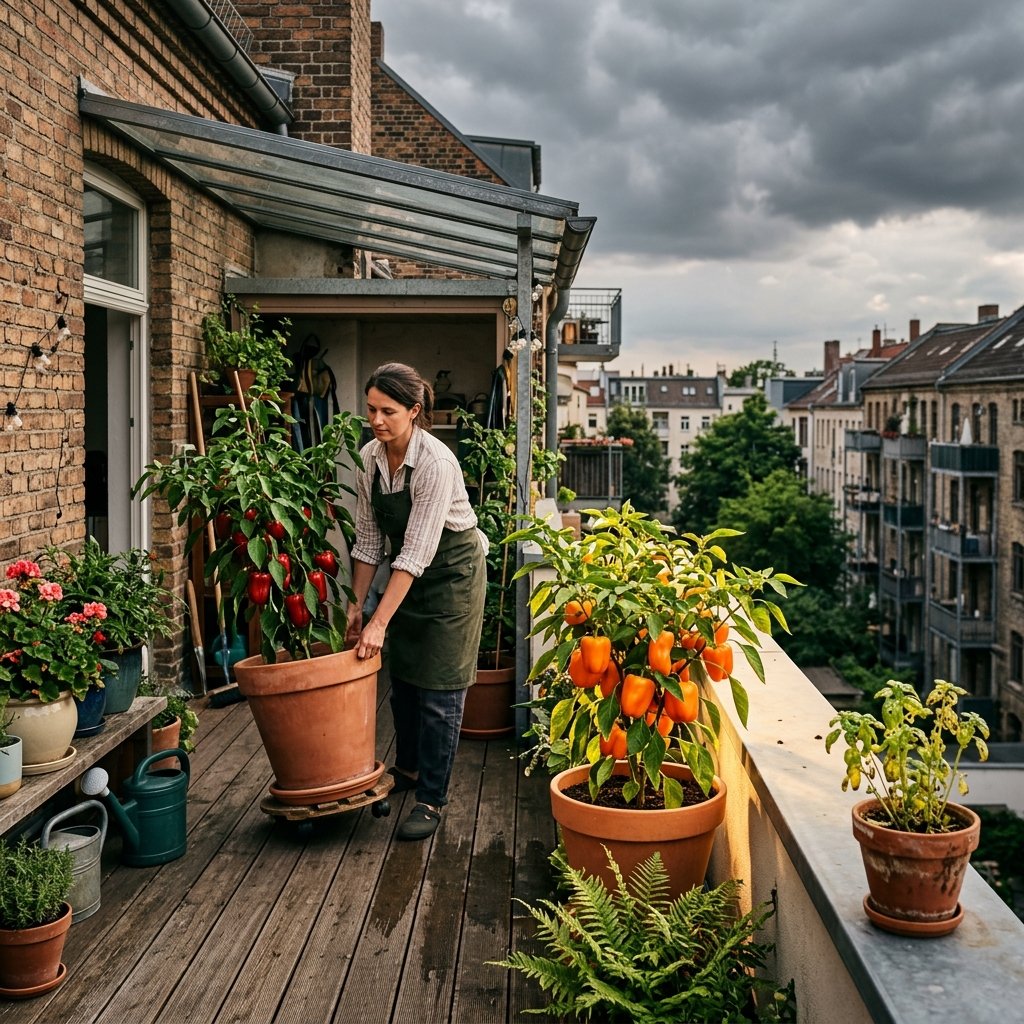
Growing peppers in containers gives you more control over pests and weather. A potted pepper is easier to move, inspect, isolate, and adjust than a plant in an in-ground bed. On a balcony, for example, you can pull a pot away from a pest-hit herb planter or move it under cover before a hard rain. Related: Ways Growing Strawberries in Containers Helps You Control Soil and Pests.
This guide relies on practical container-gardening reasoning, not live-source research, so it does not make unsupported claims about exact yields, pest rates, or variety performance. Containers will not make peppers pest-proof or weather-proof. They simply give beginners more ways to act before small problems become big ones.
Why Growing Peppers in Containers Gives Beginners More Control Than Garden Beds
For beginners, container-grown peppers offer clear control points: small conditions you can adjust without reworking an entire garden bed. This is practical layout reasoning, not measured trial data. The value is access and adjustability, not a guarantee of healthier pepper plants.
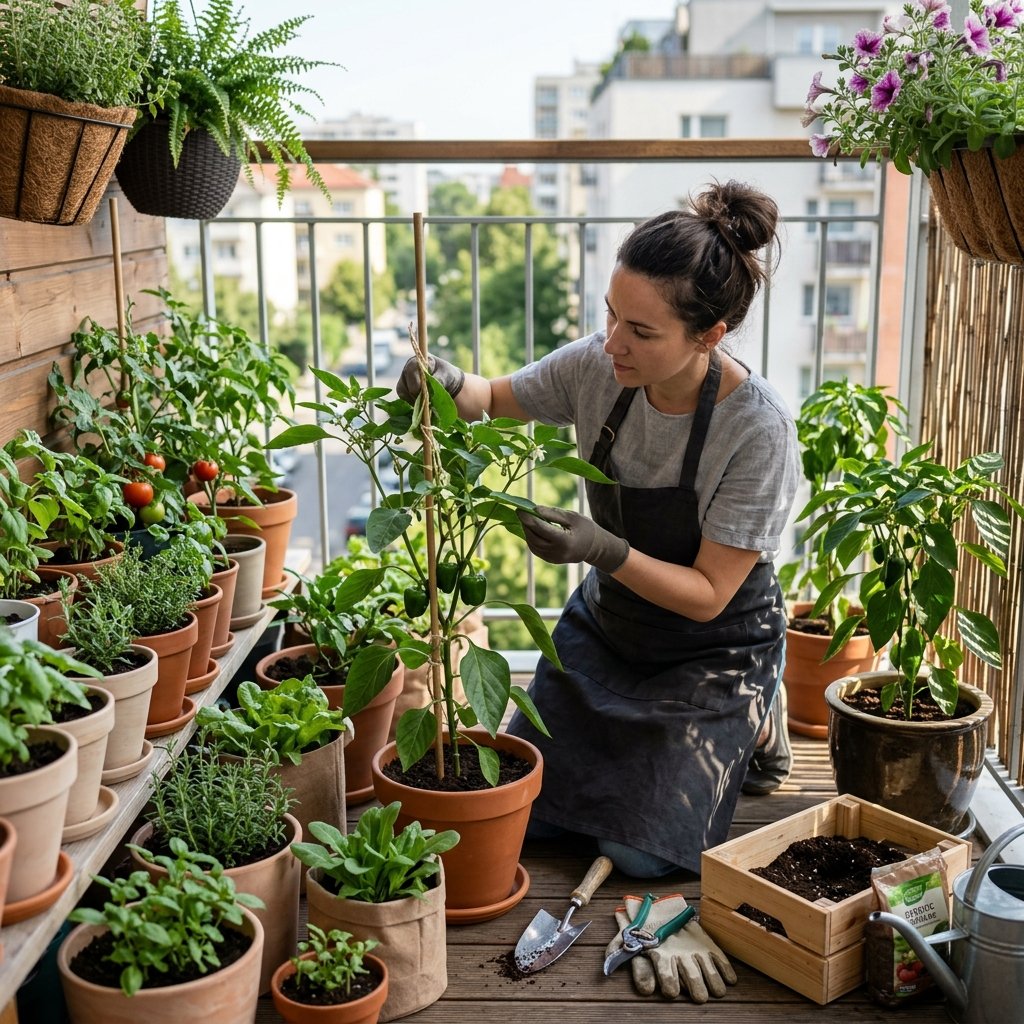
- Position: an in-ground pepper stays in one patch; a potted pepper can move into a different microclimate, meaning the small local conditions around the plant.
- Height: raised pots make leaf and stem inspection easier because the plant sits closer to eye level.
- Soil: each container has its own potting mix, so one problem pot does not require disturbing the whole planting area.
- Separation: one pepper can be pulled away from the group for closer watching, treatment, or simple observation.
The real benefit is not protection; it is adjustability
A garden bed works more like a fixed room. A container is more like a chair you can slide closer to the window, away from a draft, or out of the crowd. That flexibility helps beginners respond sooner when something looks off.
If curled leaves appear on one potted pepper, that single plant can be moved away from the others. The gardener can check the undersides of the leaves, inspect the stems, and monitor or treat that plant without disturbing every pepper nearby. The process stays visible and manageable.
The trade-off is that control requires attention. University of Minnesota Extension guidance on growing peppers notes that peppers need consistent care, while container peppers can dry out faster than plants in open soil, and poorly placed pots may tip in wind. Still, for a small Organic Urban Garden, being able to lift, turn, water separately, and inspect from all sides can make pepper care easier to understand.
Pest Problems Are Easier to Spot, Separate, and Interrupt
The same all-around access that makes container peppers easier to tend also makes them easier to inspect for pests. Each plant has a defined boundary: one pot, one stem cluster, and one small canopy. Early warning signs stand out sooner, including ants on stems, sticky residue on leaves, pale speckling, or fresh chewing around new growth.
For beginners, visibility is the biggest advantage. Raised pots bring stems and leaf undersides closer to eye level, so small pests such as aphids, whiteflies, and mites are easier to catch before a minor problem turns into a larger infestation. This is practical observation rather than verified pest-rate data, so treat containers as an inspection advantage, not a pest-proof system.
- Place pots where you can walk around them, such as beside a patio path or balcony door.
- Keep pepper leaves from touching neighboring plants so pests have fewer easy bridges.
- Check new growth, flower buds, stems, and leaf undersides during regular watering.
- Look for trails, slime, or chewed lower leaves that may point to slugs or other ground-crawling pests.
Isolation is simpler when the sick plant is in its own pot
Isolation means moving a suspicious plant away from healthy plants while you inspect it. If one pepper looks curled, sticky, speckled, or unusually weak, you can move the whole pot to the far side of a balcony, patio, or utility area.
That is harder in a garden bed, where roots, leaves, mulch, and watering zones often overlap. With a container, the root zone and foliage move together, more like picking up one lunchbox than separating food from a shared tray. Isolation may slow spread, but it does not guarantee containment.
Containers make ground-crawling pest access less direct
A pot on a clean patio, plant stand, or pot feet can make ground-crawling pest routes easier to see and interrupt. Trails, slime marks, and chewed lower leaves show up more clearly on hard surfaces than in dense mulch or weedy soil.
This is a barrier, not a force field. Drainage holes, saucers, nearby weeds, stored bags of potting mix, and clutter can still give pests access. Keep the area around pepper pots open enough to spot movement, wipe surfaces, and remove hiding places without disturbing the plant.
Weather Control Is Easier Because You Can Move the Microclimate
The same open, movable setup that makes inspection easier also helps you respond to weather. Keep space around pepper pots, and you can move a plant into a better microclimate when conditions shift. A microclimate is a small area with slightly different sun, wind, rain, or heat than the space around it. This section does not use verified weather-tolerance numbers, so use the examples as practical exposure adjustments rather than exact rules.
A pepper in a pot does not have to stay in one balcony corner all season. You can give it stronger morning sun exposure, move it into afternoon shade, set it near a wall for wind buffering, or slide it under shelter before heavy rain. Small shifts can make the plant easier to manage.
| Weather problem | Container response |
|---|---|
| Harsh afternoon heat on a black nursery pot | Move the pot to bright shade so the container and root zone are not baking in the strongest sun. |
| Strong wind on a balcony or rooftop | Place the pepper near a wall, railing screen, or grouped pots that reduce direct exposure. |
| Heavy rain before a storm | Slide the container under an overhang or other temporary shelter while keeping drainage open. |
| Early or late cold snap | Move the pot closer to a protected wall or under temporary cover until conditions settle. |
Think in zones around your home, not just one planting spot
Instead of relying on one “pepper spot,” choose two or three micro-zones before the season gets stressful. Treat them like parking spaces for the plant: one everyday location, one bad-weather location, and one relief location.
- Sunny production spot: the place with the best regular light for growth and flowering.
- Storm-shelter spot: an overhang, wall edge, or protected corner for hard rain and gusty weather.
- Heat-relief spot: a bright but shaded area for days when the pot is getting too hot.
That simple plan turns mobility into a useful response system, not a last-minute struggle with a heavy plant.
Mobility has limits once plants are large
A container pepper is movable only if you can move it safely. After watering, fruiting, staking, and root growth, the pot may become awkward, top-heavy, or too heavy to drag without damaging stems.
Plan for movement early. Choose a stable pot shape, use a plant caddy if it suits your space, or start the container in a spot that already has the right sun exposure and some wind protection. Gentle, planned moves are better than rushed moves during a storm. Related: How Growing Potatoes in Containers Helps You Control Soil Quality From the Start.
Container Soil Lets You Avoid Some Problems Before They Start
Choosing the right spot matters, but containers give beginners another advantage: you can start peppers in a clean, loose potting mix instead of relying on unknown garden soil. The mix is not sterile or risk-free, and containers will not prevent every soil-borne pests issue or soil-borne disease.
The benefit is control. You can choose a mix that drains well, use a pot with open drainage holes, and avoid compacted yard soil that pushes air out of the root zone. Each pepper gets its own space instead of competing in one crowded, heavy planting area.
- Do start with fresh potting mix when a previous container had root trouble.
- Do check that water can leave the pot freely after watering.
- Do replace or refresh problem mix between seasons instead of reusing it automatically.
- Don’t fill pepper containers with dense yard soil; compaction can make drainage and root growth harder.
This control over soil is one reason containers work well in small urban spaces. For the bigger beginner-friendly picture, see What is Container Gardening? 5 Proven Benefits.
Separate root zones make troubleshooting less overwhelming
When each pepper has its own container, you can compare plants pot by pot. If one pepper struggles while the others look normal, the problem may come from that container’s watering pattern, drainage, potting mix, or exposure. One pot gives you one place to inspect first.
For example, if a single container develops a root-zone problem, you can discard or refresh that pot’s mix instead of treating an entire raised bed. That may not prove the cause, but it narrows your next step and keeps beginner troubleshooting manageable.
Watering and Feeding Are More Precise, but Less Forgiving
That pot-by-pot control is one of the real strengths of container peppers. You can adjust water and fertilizer for each plant, which is especially useful in a small urban garden. The trade-off: problems show up quickly because each pepper has a limited root zone, much like a houseplant that also happens to be producing fruit.
Good container watering is not a fixed routine for every pot. A pepper beside a hot brick wall may dry out faster than one in a shadier balcony corner, even if both were watered on the same morning.
The best beginner habit is checking before reacting
Before you water, feed, or move a pepper, take a moment to check what the plant and pot are telling you. Look at the leaves, feel the potting mix with your finger, and notice whether the container feels unusually light or heavy. Recent heat, rain, and wind matter too.
That quick check helps prevent the two most common overreactions: treating every droop as thirst and every slow day as a fertilizer problem. Sometimes the plant needs water. Sometimes it needs better drainage. Sometimes it just needs less fuss.
- Check the mix first: If the surface looks dry, confirm below the surface before watering. A dry-looking top can hide damp mix underneath.
- Water the pot, not the leaves: Aim water at the potting mix so the root zone receives it directly.
- Watch for runoff: Water should be able to leave through the drainage holes. If excess water cannot escape, overwatering becomes much easier.
- Feed individually: Apply fertilizer only to the pepper that needs attention, rather than dosing every container because one plant looks pale or stalled.
- Compare pot positions: If one pepper is drying out faster, ask whether sun reflection, wind, pot size, or shade is changing its rhythm.
Containers give you useful precision here. You can ease up with one pot, water another more deeply, or skip fertilizer on a plant that already looks steady. Small adjustments work better than treating every pepper the same.
Where Container Peppers Still Need Extra Attention
That precision helps, but peppers in containers still need regular attention. This section relies on practical container setup logic rather than verified trial data, so use these points as common-sense risk checks, not guaranteed outcomes.
Small pots can become dry pots quickly in hot, windy spots. That can make weather control harder instead of easier. Tall pepper plants can also face wind tipping, especially once fruit adds weight near the top.
Dark containers may absorb strong sun and increase heat stress. Tight balcony layouts can create crowding, which limits airflow and makes pest checks harder.
- Watch for dry pots: leaves drooping while the pot feels light.
- Watch for wind tipping: leaning stems, rocking pots, or loose stakes.
- Watch for heat stress: limp leaves during strong afternoon sun.
- Watch for pollination issues: flowers dropping without fruit forming, especially in still, sheltered corners.
- Watch for crowding: leaves from different pots touching like a packed subway car.
A simple setup makes control easier later
Start with a stable container that has drainage holes. Trapped water takes away one of the main control benefits of container growing. Leave enough room to inspect every side of the plant, not just the front. Add staking, which means using a stake or cage to support the stem, before the pepper becomes tall and brittle.
Keep pots close enough to manage easily, but not so close that leaves overlap. Place containers where runoff will not stain a balcony, pool near a wall, or bother a neighbor below. For a broader look at small-space systems, see What is Container Gardening? 5 Proven Benefits.
How This Fits Into a Small-Space Vegetable Garden
Container peppers fit neatly into a small-space vegetable garden because each pot acts like a movable mini bed. On a small patio, balcony garden, or apartment garden, that gives you more control over the layout. You can group crops by sun exposure, move pots as conditions change, and isolate a struggling plant before it affects the rest of the setup.
That same control helps with other container crops, although each one has different needs. Tomatoes may need stronger support, while cucumbers may need a trellis. Strawberries often do well in shallower companion containers. Placed nearby, these pots can save space or add plant diversity without crowding the peppers.
Treat the layout like a tiny kitchen: every container needs a sensible place, not just any open spot. A practical setup might put peppers in the sunniest corner, herbs in smaller pots near the door, and a vining crop where it can climb without shading everything else.
A simple rule works well: give peppers the sunniest stable position first, then arrange supporting crops around their light, support, and access needs. Crop rotation means changing where related crops grow over time to reduce repeated soil problems. In containers, that can be as simple as refreshing potting mix and not reusing the same tired pepper pot for another pepper right away. For broader planning ideas, The Urban Vegetable Garden Revolution is a helpful next step.
Conclusion
The main advantage of growing peppers in containers is control. Pest and weather problems are easier to spot, usually affect fewer plants, and can be corrected faster. Containers are not a cure-all, though. They only work well if you can provide drainage, steady watering, enough spacing, and a practical way to move heavy pots when needed.
Start with one or two pepper pots on a balcony, patio, or sunny doorstep. Notice where the sun lasts longest, where the wind hits hardest, and how quickly the mix dries. Then adjust one pot at a time.