
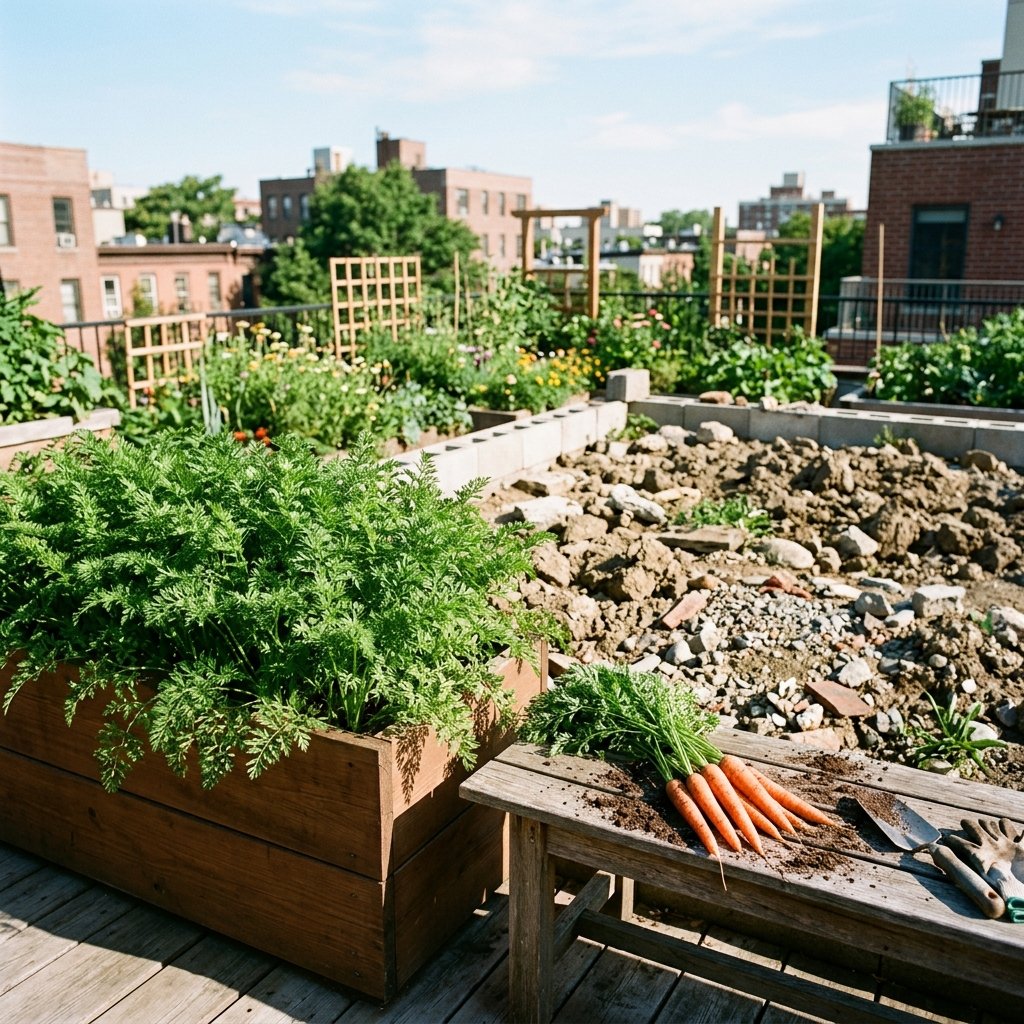
Growing carrots in containers is often easier than fighting rocky, compacted ground. Carrots need a loose root zone with nothing blocking their growth. This guidance is based on practical gardening reasoning, not live source research, so it avoids statistics, brand claims, and guarantees.
If your garden soil is full of stones, clay clumps, or construction rubble, a pot gives beginner gardeners a cleaner place to start. A balcony container filled with loose mix will not solve every carrot problem, but it can remove the biggest obstacle: roots struggling through hard, crowded soil.
Why Rocky, Compacted Soil Makes Carrots So Frustrating
Hard, crowded soil matters because the part you eat is the enlarged taproot: the main root that grows downward. When that root meets resistance, the carrot shows the damage in its shape.
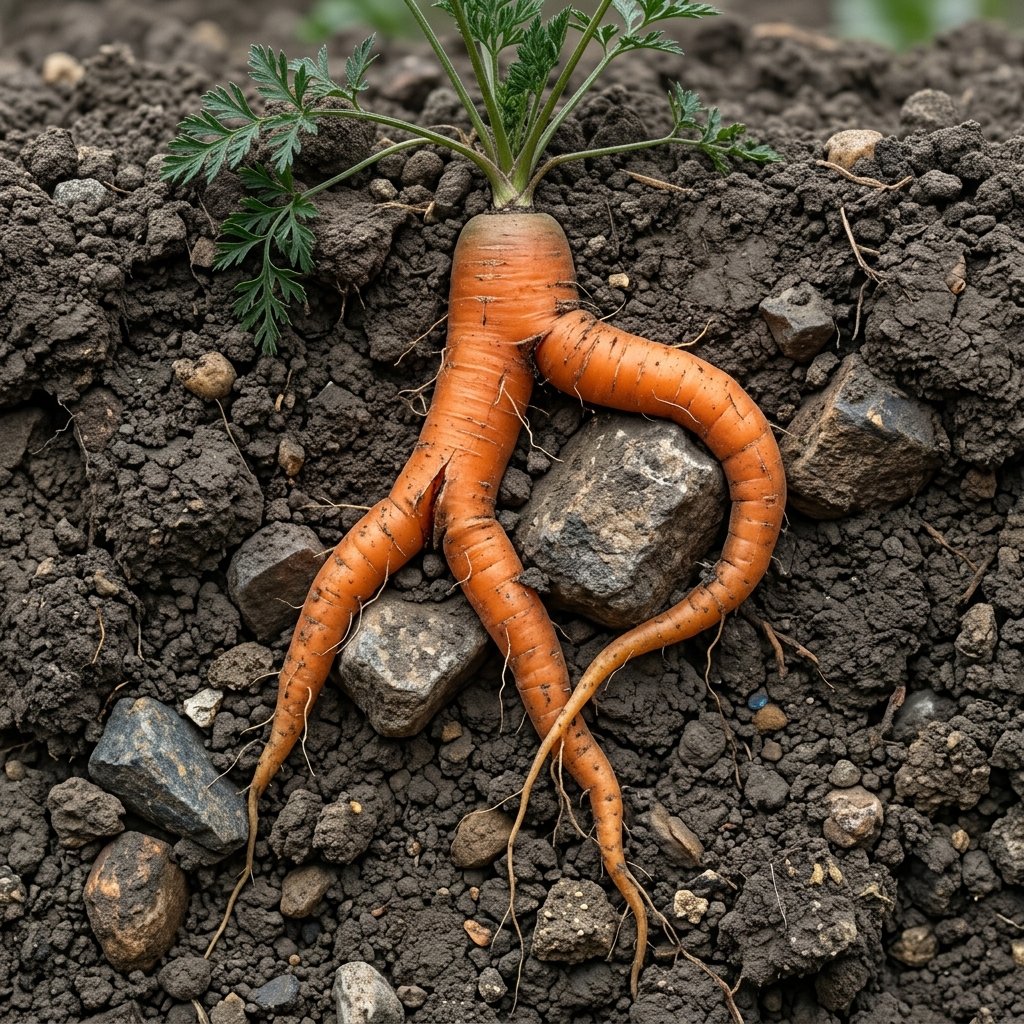
The practical point is simple, even without yield numbers. Carrots need a clear, loose path more than many common balcony crops do. A tomato plant can still set fruit while its roots work around small stones. A carrot’s edible root records every stone, clod, and tight layer it had to dodge.
- Rocky soil can make roots split or bend around stones, leading to forked carrots.
- Compacted soil can slow root development, leaving carrots short, stubby, or uneven.
- Hard clods or hardpan can make mature carrots harder to pull cleanly without snapping.
The Problem Is the Root Zone, Not Your Gardening Skill
Misshapen carrots do not automatically mean you did anything “wrong.” Carrots need nutrients, but they also need open space below the surface. The taproot is like a soft pencil being pushed through a packed sponge: if the path is tight or blocked, it bends.
Use a simple beginner test. If the soil is hard to push a finger into, it is probably not ideal for straight carrots. Leafy greens can often manage in shallow, imperfect soil; carrots have to form the harvest inside that soil.
Growing Carrots in Containers Gives You Control Where It Matters Most
Containers help most at the root zone. Instead of trying to fix a whole patch of difficult ground, you can build a carrot-friendly space from the start. You choose the growing medium, texture, light, and moisture routine.
Without verified tested yield comparisons, the safest guidance is practical rather than promise-based. Treat a container as a raised growing space you can reset with clean ingredients. Use a fine, loose potting mix, meaning a bagged growing medium made for pots, and make sure the container drains so excess water can escape.
- In the ground: you may need to dig, screen out stones, loosen dense areas, and improve a whole bed before sowing.
- In a container: you can start with an even mix, set the pot in the sunniest usable spot, and harvest without prying roots from heavy soil.
That same control is why many urban gardeners grow other crops in pots. The guide Ways Growing Strawberries in Containers Helps You Control soil and pests uses a similar principle, though carrots depend more on straight root depth than above-ground fruiting.
What Containers Fix Immediately
A container can remove several problems right away: rocks, buried debris, compacted subsoil, uneven bed texture, and some weed competition. Seedlings do not have to push through the existing ground.
That control is especially useful on patios, balconies, and small rental gardens where deep digging is not realistic. Instead of renovating a full bed, you fill one pot with a loose mix and give the carrot root enough vertical room to grow downward. Not magic — just a cleaner starting point.
What Containers Do Not Fix for You
Containers solve bad ground, but they do not prevent every carrot-growing mistake. Seedlings can still struggle if they are crowded, the potting mix dries out again and again, the pot is too shallow, or the container sits in too much shade.
The main trade-off is watering. Pots usually dry faster than in-ground beds, especially on warm balconies or windy rooftops, so the moisture routine matters more. Containers make soil texture simpler; they do not make the crop maintenance-free.
Choose a Container Deep Enough for the Carrot You Want
Once the mix is loose enough, depth becomes the main container decision. Choose the carrot variety first, then match the pot to it. A good rule: use a container deeper than the mature root you expect, with extra space below so the tip does not run into the bottom.
Use the variety description on your seed packet as your guide rather than guessing from product photos or relying on unverified container measurements. Short and round carrots are more forgiving in shallow urban setups. Long, tapered carrots need a deeper bucket, tub, or grow bag.
- For short carrot varieties: a wide window-box-style planter can work well because the roots do not need as much vertical space.
- For round carrots: a broad planter box is often a beginner-friendly choice because the roots form more like small globes than long spears.
- For longer carrots: choose a deeper bucket-style container or grow bag so the root has room to stretch downward.
If you are still choosing a setup for a balcony, patio, or doorstep, How to Choose Container Gardening: 5 Remarkable Insights can help you compare container gardening options before buying supplies.
Depth Matters More Than Fancy Materials
Carrots do not need expensive containers. A clean pot, tub, planter box, or grow bag can work if it is deep enough, has drainage holes, and is made from material that is safe for growing food.
Avoid reused chemical buckets or mystery containers. The risk is not worth it.
Drainage holes are essential because soggy potting mix can cause root problems, especially in containers that hold water after rain. Wide containers also make sowing easier because carrots are usually direct-sown. You plant the seeds where the carrots will grow, in rows or small patches, instead of transplanting them later.
Fill the Pot With Loose Mix, Not Heavy Yard Soil
Carrot seeds are sown where they will grow, so start with a loose, even medium in the pot. Do not scoop rocky or compacted garden soil into a container and expect straight, well-shaped roots. Carrots need a mix they can push through easily. Related: How Growing Potatoes in Containers Helps You Control Soil Quality From the Start.
Heavy yard soil often performs worse in a container than it does in the ground. Water and air have less room to move, and poor drainage can leave the mix dense and sticky. Instead of creating a soft root zone, it can settle into something closer to a packed mud brick.
Use a light potting mix made for containers as your starting point. If you add compost, use a modest amount and make sure it is well broken down. If you adjust the mix with other materials, judge the finished soil texture, not the ingredient list. The mix should feel loose, even, and easy for a young root to move through.
- Do aim for a loose, crumbly mix with no stones, wood chunks, or hard clods.
- Do break up or screen lumpy material before filling the pot.
- Don’t use dense clay-like garden soil just because it is free.
- Don’t turn the pot into a heavy block that stays soggy after watering.
The Texture Test Beginners Can Actually Use
Before sowing, moisten a handful of mix and squeeze it gently. It should hold together lightly, then break apart when you poke it with a finger. Soft crumble is the goal.
If the handful stays in a hard lump, the mix is too dense for straight carrot growth. If it contains lots of pebbles, bark pieces, or compacted chunks, screen it or switch to a better container mix. This quick test helps you create a fine seedbed: a smooth, small-particle surface where tiny carrot seeds can settle evenly.
Sow, Thin, and Water So the Container Advantage Is Not Wasted
A fine seedbed only pays off if you manage the seedlings after planting. Carrots are usually grown by direct sowing, which means placing carrot seeds straight into the container where they will mature. Disturbing tiny young roots can lead to poor shapes or setbacks.
This section is not based on a verified spacing chart, so use your seed packet for exact planting depth and seed spacing. For beginners, the priorities are shallow sowing, timely thinning, and steady moisture.
- Sow shallowly as directed. Make a smooth seed surface, plant according to the packet, and cover lightly. Tiny seeds do not need to be buried in a trench.
- Label the container. Write the variety name and sowing date so you know the root length and timing you are working with.
- Protect the surface. A very light layer of mulch can help slow drying, but do not bury seedlings under chunky material.
Common mistake: starting with a perfect loose mix, then letting a thick green carpet of seedlings stay in place. If 50 seedlings are crowded together in one small planter, many carrots can still come out skinny, twisted, or tangled.
If you are still learning the basics of pots, drainage, and small-space growing, What is Container Gardening? 5 Proven Benefits gives helpful background before you scale up.
Thin Early, Even If It Feels Wasteful
Thinning means removing extra seedlings so the remaining carrots have room to widen. It can feel wrong at first because you are taking out healthy plants. Crowded roots compete for space, and that cramped start can leave them with no room to size up properly.
Follow the seed packet for final seed spacing rather than guessing. If pulling extras might tug nearby seedlings out of place, use small scissors to snip the unwanted seedlings at soil level. That keeps the root zone calmer for the plants you want to keep.
Keep Moisture Steady, Not Extreme
Containers can dry faster than in-ground beds, especially on hot patios, balconies, and rooftop corners. Check moisture regularly with the finger-check method: press a finger into the mix, and water when the upper layer starts to feel dry rather than waiting for the whole pot to turn dusty.
Aim for consistent moisture, not a swamp. Water should move through the drainage holes, but the container should not sit in standing water. Repeated swings from too dry to too wet and back again stress tiny seedlings and waste the careful setup you created.
When Containers Beat Soil Repair—and When a Garden Bed Still Makes Sense
Once drainage and moisture are under control, the next question is whether containers are the best place to grow carrots at all. They usually are when fixing the ground would be slow, uncertain, or impossible. A garden bed still makes sense when the soil is already loose, clean, and easy to work, especially if you want a larger harvest.
Use this as a practical decision guide rather than a source-tested comparison; no usable live research was available for this section. Match your situation to the option that removes the biggest obstacle.
Best Fit for Beginners With Bad Ground or Small Spaces
Start with containers if you rent, garden on a paved patio, or grow on a balcony where digging is not an option. They are also a smart trial run if your yard has rocky ground, compacted soil, or soil with an unknown history.
In urban gardening, “unknown history” can mean old fill, construction rubble, or ground you simply do not control. A few pots let you grow carrots in a managed setup before you commit to repairing a bed.
- Choose containers if: you have rocky, compacted, contaminated, or unknown soil; you garden in small spaces; you need a portable setup for a patio garden; or your rental agreement does not allow digging.
- Choose raised beds if: you want more root room than pots provide but still need to build above poor ground. Raised beds are planting boxes or framed beds filled with improved growing mix.
- Choose an in-ground garden bed if: your soil is already loose, stone-free, and workable, or if watering many separate pots would become a chore.
- Choose soil repair if: you plan to grow many crops in the same area for several seasons and have permission, time, and energy to improve the bed gradually.
If you grow on a balcony or patio, container skills transfer well to other crops. After carrots, guides such as Growing Garlic in Containers: Fresh Bulbs Without a Garden Bed may be useful, along with beginner resources on balcony vegetables and other container crops.
Conclusion
Growing carrots in containers is often the better choice when poor soil texture is the main problem. A pot will not guarantee perfect carrots, but it does remove one of the biggest beginner hurdles: rocky, compacted soil that pushes against the developing root.
Use a simple rule: if your garden bed is already loose, deep, and stone-free, planting in the ground may be easier. If not, start small. Fill one deep pot with loose, stone-free potting mix, sow directly, thin the seedlings, and keep the moisture steady. One patio pot is a smarter first test than overhauling an entire bed.