
Introduction
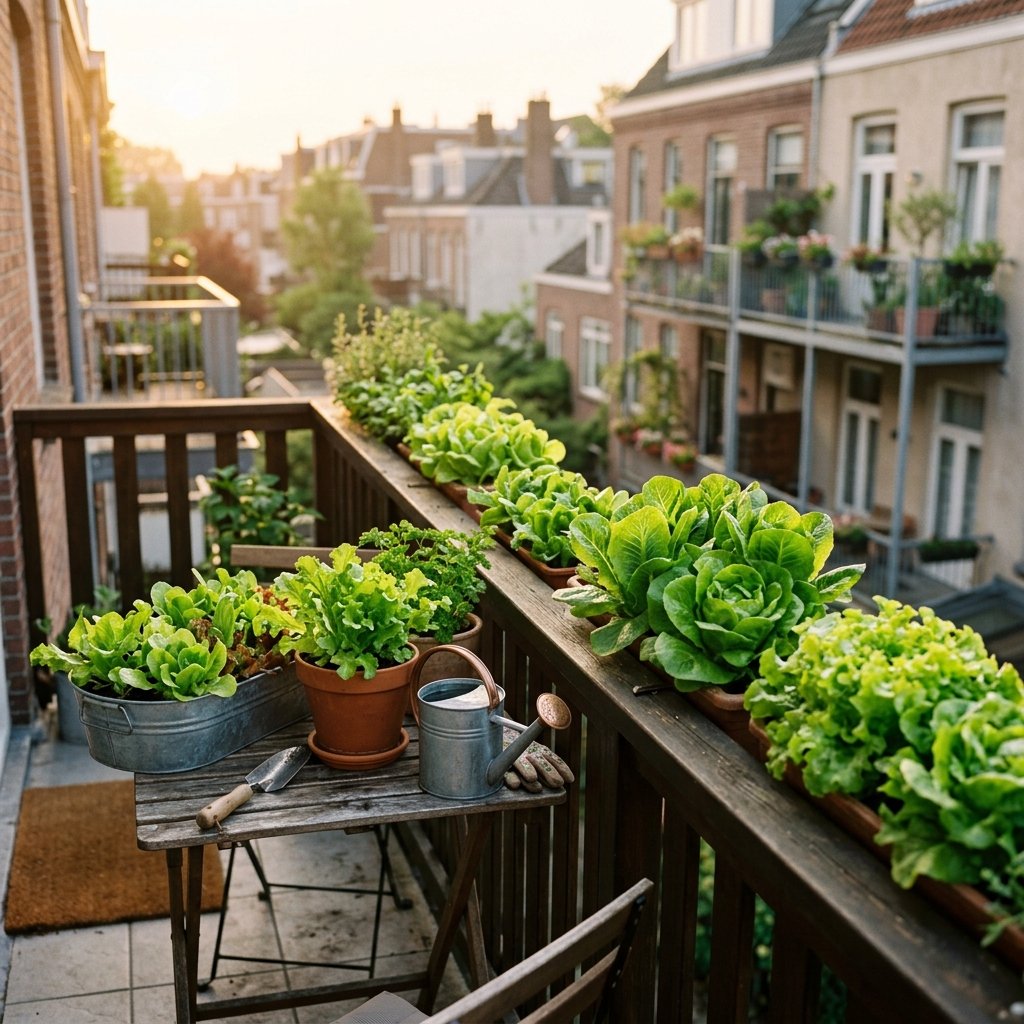
Growing lettuce in containers works well on patios, balconies, windowsills, and other small spaces. The main factors are the container, drainage, light, planting method, care routine, and the type of harvest you want—not the presence of a backyard.
Leaf lettuce is particularly well suited to containers: the University of Maryland Extension lists ½ gallon as its minimum container volume. Baby-leaf lettuce can also grow in indirect summer light, so “full sun” is not a universal requirement. Decide whether you want baby leaves or mature heads and consider the planting season before choosing your setup.
Choose the lettuce style before you buy a container
Start with your harvest goal: tender baby leaf can be picked repeatedly and requires less space than a mature plant grown for one full head. Your choice determines the container volume, planting density, and whether seeds or transplants are the better fit.
| Growing style | What it means for your container |
|---|---|
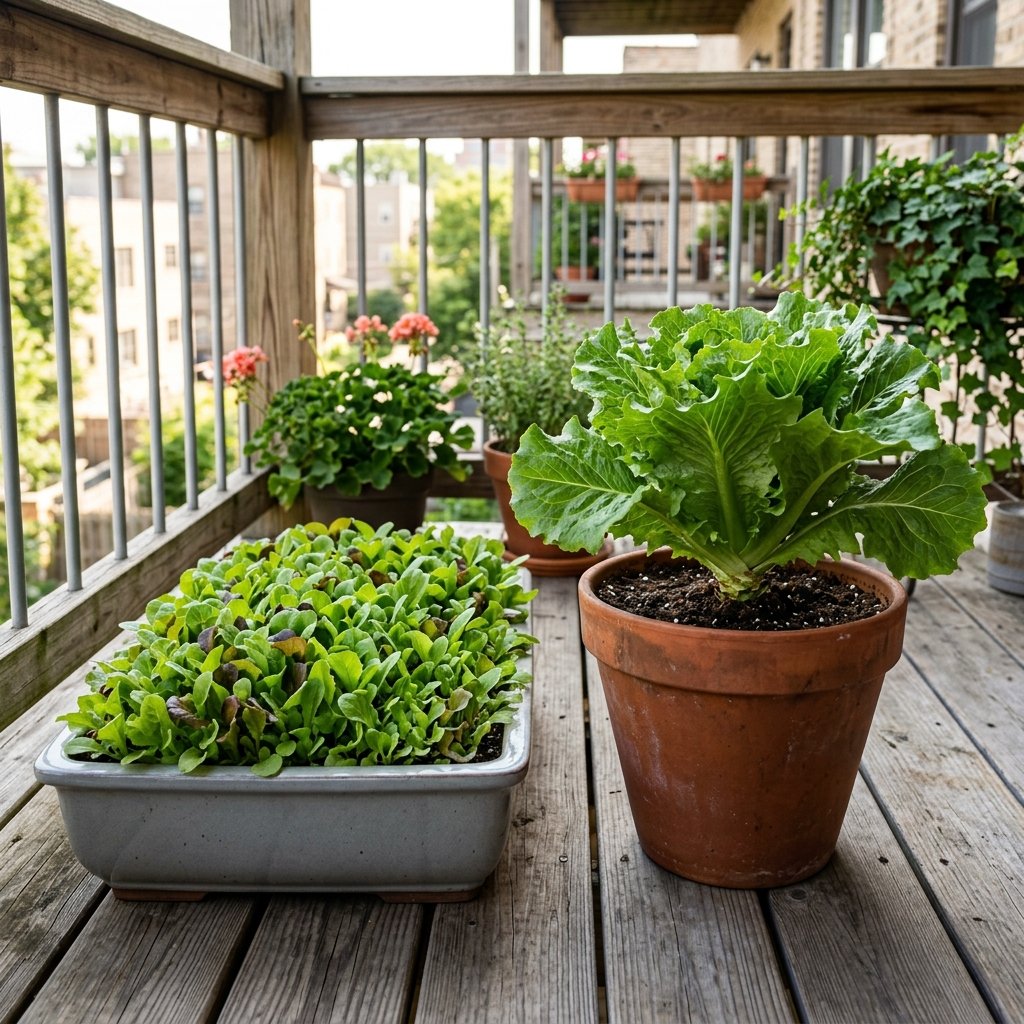
| Baby-leaf, cut-and-come-again harvest | Plant several lettuce plants close together, then snip the young leaves for salads and let them regrow. The University of Maryland Extension lists ½ gallon as the minimum container volume for leaf lettuce. Use that as a baseline rather than a guarantee: container shape, cultivar, and growing conditions also affect results. |
| Head lettuce | Grow each plant until it forms a mature head, such as a butterhead, romaine, or crisphead. Because individual plants need more room, check the cultivar’s seed packet or transplant label before selecting a pot. |
Baby leaf is harvested gradually with scissors, whereas head lettuce stays in the container until it forms a single, full head. If you are unsure where to start, leaf lettuce makes the most efficient use of limited space. For broader guidance on matching pots to crops, see How to Choose Container Gardening: 5 Remarkable Insights.
A beginner setup for growing lettuce in containers
Once you have chosen how you want to harvest, gather four essentials: a container with drainage holes, quality potting mix, lettuce seeds or transplants, and a way to water thoroughly. Leaf lettuce needs at least ½ gallon of container volume, according to University of Maryland Extension’s container guidance. Larger containers are usually easier to manage because they dry out more slowly.
- Choose a container. A salad table, planter, grow bag, or window box can work if it offers enough root space and has drainage holes. A clean five-gallon bucket is another option once you add holes near its base. If you have no outdoor space, an apartment gardening guide can help you adapt the setup for a balcony or indoor growing area.
- Gather planting material. Buy lettuce seeds or healthy transplants labelled for the harvest size you want. Choose container potting mix instead of soil dug from the ground, which can become dense and restrict the movement of air and water.
- Plan watering. Keep a small watering can, hose wand, or similar tool within reach. Apply water slowly to the surface until the mix is evenly moist and excess water drains from the holes.
Use potting mix and plan how much you need
Potting mix is sold by volume, usually in cubic feet. University of Maryland Extension estimates that one 2-cubic-foot bag fills about three five-gallon buckets or grow bags. Use that figure as a shopping estimate, not as a requirement for every lettuce container to hold five gallons or be filled to the same level.
Container shapes affect how much mix you need, so a salad table or window box may require a different amount. Measure each container’s capacity, then buy slightly more mix than the calculation suggests to account for settling and prevent roots from becoming exposed. Do not place gravel in the bottom: the same Extension guidance says it does not improve drainage.
Match your light and season to the harvest you want
Once your container mix is ready, choose the site based on the harvest you want instead of automatically seeking maximum sun. Lettuce tolerates 4–6 hours of direct light daily in partial shade, while baby-leaf lettuce can grow in entirely indirect light during summer, according to University of Maryland Extension.
- If your patio receives 4–6 hours of direct light: grow leaf lettuce or plan for a more mature harvest, while monitoring heat and afternoon exposure. This amount of light falls within lettuce’s partial-shade tolerance.
- If you have a bright summer location with indirect light: choose baby-leaf lettuce and harvest the young leaves instead of waiting for a large head. Indirect light can make summer production possible rather than merely serving as a fallback.
- If your balcony is hot and exposed: check the container’s conditions throughout the day and change its position when necessary. Balcony microclimates can be hotter, windier, or brighter than nearby ground-level conditions suggest. Move the pot into gentler light or shelter if the plants show signs of stress.
Season matters as much as sunlight. University of Minnesota Extension describes ideal conditions as a nighttime low near 50°F and daytime temperatures up to 68°F. Utah State University Extension says lettuce generally grows best below 75°F. Warm weather and long days can trigger bolting, ending the useful harvest.
If your balcony is both hot and windy, use the small-balcony problem-solving guide to refine the container’s placement. Treat light as a dial rather than an on/off switch: match the conditions to baby leaves or mature plants, then adjust the pot as the season changes.
Plant seeds or transplants with enough room to grow
Start with lettuce seeds or purchased transplants, then set the spacing according to the variety and your harvest plan. Treat the planting directions as a layout guide: too many plants in one pot compete for light, water, and nutrients, resulting in smaller, crowded growth.
- Read the label first. Check the seed packet or transplant tag for the recommended planting depth and spacing. Lettuce varieties differ in mature size and harvest stage, so one spacing rule cannot suit every cultivar.
- Sow or plant carefully. Place lettuce seeds at the packet’s recommended depth, or set each transplant as deeply as its tag directs. Keep the growing point—the center where new leaves emerge—above the potting mix.
- Thin crowded seedlings. Remove extra seedlings while they are still small. If several emerge in one spot, snip out the weakest plants instead of pulling them and disturbing nearby roots. Leave the spacing recommended for your intended harvest.
A shallow planter for baby leaves can be sown more densely because the lettuce will be harvested young. A pot for larger, individually grown plants needs wider spacing. For more small-space ideas, see Gardening in an apartment without a balcony: The Complete Beginner Guide.
When a seed packet should overrule a general rule
The supplied research does not establish one universal spacing or harvest timeline for every lettuce cultivar. The University of Minnesota Extension guidance lists different spacing for baby leaf, mini heads, full-size leaf, and full-size head lettuce. Follow the seed packet or transplant label for your chosen variety, and use this article for guidance on container setup, light, and harvest strategy. Pelleted seed, including the researched ‘Reno’ format, is another available seed form.
Keep container lettuce on track from watering to harvest
Build watering and harvesting into a regular routine. Inspect the container, check the potting mix and leaves, water when needed, and harvest according to your planting style. Because limited root space can cause moisture levels to shift quickly, checking containers regularly works better than following a fixed watering calendar.
According to University of Maryland Extension guidance, check containers daily, particularly during summer. Water at the base until the entire mix is moist again and excess water drains through the holes. Empty the saucer afterward to maintain good drainage. Wilting does not always mean the mix is dry; both under-watering and overwatering can cause it.
Harvest for a salad tonight or a longer picking window
Choose a harvesting method that matches your goal:
- Baby greens: Pick some leaves when they reach the size you want to eat, leaving the remaining seedlings to grow.
- Larger leaf lettuce: Remove selected outer leaves while the plant is still producing healthy foliage, and leave the central growing point undisturbed.
Harvest cleanly and include it in the same routine as watering. A small handful may be all you need from a baby-leaf crop, while selective picking can extend the harvest from a larger plant. If you are planning additional seasonal crops for a balcony or patio, use the site’s What is Container Gardening? 5 Proven Benefits guide with your balcony vegetable gardening calendar.
Troubleshoot the two signals beginners notice first
When planning seasonal crops for a balcony or patio, watch for two early warning signs: a flower stalk rising from the center or leaves that no longer taste good. The first usually indicates bolting, the plant’s shift into flowering and seed production—not necessarily a pest or disease.
| What you see | What to do next |
|---|---|
| A tall central stalk or flowers | Reassess the container’s seasonal exposure. The University of Minnesota Extension explains bolting as flowering-stalk growth associated with heat, high light intensity, and long days. Heat stress may contribute, but available guidance does not support assigning every case to one cause. During summer, grow baby leaves in indirect light if that setup suits your space. |
| Bitter lettuce or leaves that disappoint you | Harvest the younger leaves and review the plant’s seasonal conditions. University of Maryland Extension links high summer temperatures and increasing day length with bolting and bitter flavor. These are physiological responses, not evidence of infection, but drainage still deserves attention: make sure water can escape and the mix is not staying saturated. |
If the symptoms persist or do not match either pattern, ask your local Cooperative Extension resource for help instead of diagnosing the plant from a photo. For balcony-specific placement ideas, see Small balcony gardening for beginners: The Complete Guide.
Conclusion
Leaf lettuce is the most forgiving starting point for growing lettuce in containers. Choose a container with drainage, using the University of Maryland Extension’s ½-gallon minimum for leaf lettuce as your starting point. Adjust the container size to suit the cultivar and the harvest size you want.
Match the container’s light to the season: a bright summer location does not need full direct sun to produce baby leaves. Fill the container with quality potting mix, then check the seed packet or transplant label before planting. Start with leaf lettuce in a well-drained container, and adjust spacing, light, watering, and harvest timing to suit the variety and season.