
Introduction
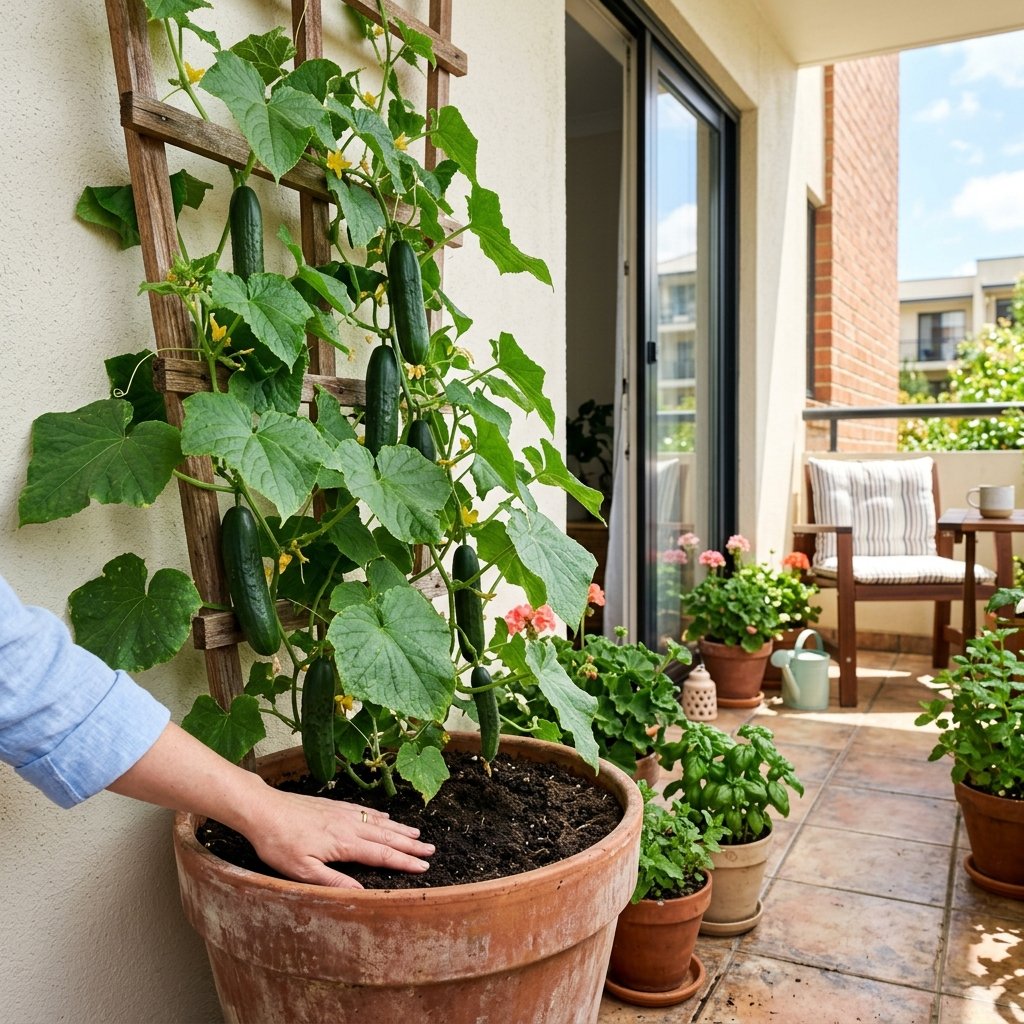
Growing cucumbers in containers can produce a generous harvest on a small patio, but cucumber vines need enough root space, consistently moist growing medium, and reliable stem support. Crowding extra plants into a limited area will not solve those problems.
Healthy plants and larger harvests depend on the right container, a sunny site, sturdy support, and consistent daily care. Begin with container volume: the University of Maryland Extension’s container guidance lists 5 gallons as the minimum for cucumbers. Container size is therefore the first decision to make.
Assess Patio Conditions Before Growing Cucumbers in Containers
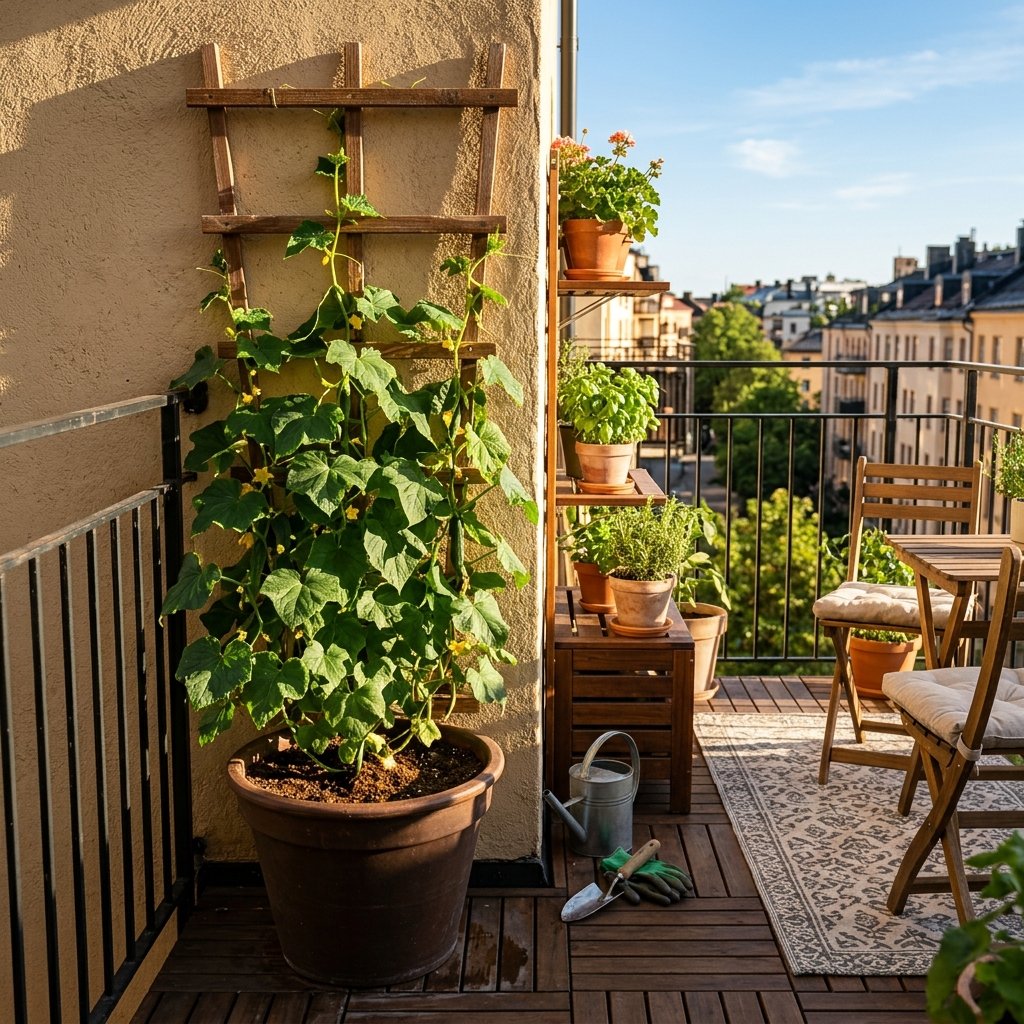
Choose the patio location before buying a pot or trellis. Growing cucumbers in containers requires at least six hours of direct light daily, or full sun. Even a bright location can fail if strong wind twists an unsupported vine or causes the container to dry out quickly.
Check the spot before buying the pot
Stand in the proposed location and observe it throughout a full day. Note where direct sunlight falls, whether nearby buildings or railings create a wind funnel, and whether rainwater can drain safely without staining walls or reaching a neighbour’s space.
Renters should check building rules and confirm that a filled container may remain where it is placed. A protected corner can reduce wind exposure, but it still requires careful attention to airflow and watering. Treat the patio microclimate as the plant’s immediate weather.
- Light: choose the brightest stable position, not merely the brightest part of the patio.
- Wind: if air races between buildings or through railings, plan support before planting.
- Placement: place the container beside a railing or wall only after confirming that the structure will not shade the plant or make the pot unstable.
- Drainage: make sure excess water has a safe route away from walls, walkways, and lower balconies.
If heat, wind, pests, or runoff complicate your site, the advice in Apartment Patio Gardening: How to Create a Lush can help you assess the wider balcony setup before purchasing supplies.
Set Up the Right Container for Cucumbers
Use a 5-gallon container for one cucumber plant. The University of Maryland Extension’s container guidance identifies 5 gallons as the minimum for cucumbers, but meeting that minimum does not guarantee the highest possible yield.
Choose a pot with several drainage holes to let excess water escape and prevent saturated roots. Fill it with a commercial potting mix formulated for containers, which balances moisture retention with drainage. Garden soil is not a suitable substitute. The pot’s container volume should also accommodate the plant’s mature size.
Choose the plant to fit the pot and patio
A bush, dwarf, or compact variety generally needs less room and may work well on a small patio. A vining cucumber requires more vertical space, along with a trellis or another support. Neither growth habit is automatically better; choose based on the plant’s mature size and the container and support your space can accommodate.
Read the cultivar description and packet directions before buying. The University of Maryland Extension notes that bush, dwarf, and compact cucumbers can grow in smaller containers, so do not assume every cucumber has the same requirements. For example, Johnny’s lists Quick Snack F1 as having compact vines and being suitable for containers.
A practical shopping list includes one cucumber plant or packet, one adequately sized pot with drainage holes, enough potting mix, and a support chosen before planting. The same planning approach can help with Growing Tomatoes in Containers Gives Beginners a Head start in small spaces.
Plant at the Right Time and Add Support Early
Once the site and container are ready, fill the container, install the support while the soil is still undisturbed, then sow seeds or transplant according to the seed packet or plant label. This sequence protects the roots and gives a vining cucumber a clear path from its first growth.
- Fill the prepared container with its growing medium.
- Secure a compact trellis or another vertical support in the container before planting.
- Plant seeds or a purchased transplant according to the instructions supplied for that cultivar.
- Check local conditions before planting. University of Maryland and Penn State guidance both link cucumber timing to suitable growing conditions rather than a universal calendar date. For local scheduling help, see gardening at apartment balcony: 7 Best Expert Tips.
Seeds or transplants: use the instructions that came with the plant
Direct sowing works well when the growing season is long enough and you want to avoid disturbing young roots. Follow the seed packet for planting depth and spacing. For example, Johnny’s Selected Seeds provides sowing-depth and thinning guidance for its Quick Snack F1 cultivar.
A purchased transplant may be a better fit for a shorter growing season or for gardeners who prefer to start with an established plant. Handle the root ball gently and follow the plant label; Illinois Extension advises against pulling cucumbers bare-root. Neither method is universally superior. Base the choice on your timing, confidence, and the cultivar’s instructions.
Make the support part of the container setup
Choose a trellis that matches the cucumber’s growth habit. A compact patio trellis or securely anchored vertical support can guide a vining plant upward, making growing cucumbers in containers practical where floor space is limited.
Install the support before sowing or transplanting, and position it so the container remains stable in patio wind. University of Minnesota Extension says vining cucumbers can be trained on a 3–4-foot trellis. Avoid pushing a support into an established root zone later, since doing so can disturb the roots and force the vine to change direction.
Avoid this: Do not plant first and postpone installing the trellis. Early support is easier to anchor and gives the young vine a structure to follow.
Keep Container Cucumbers Evenly Watered and Fed
Check the potting medium regularly and water when it begins to dry, rather than following a fixed calendar. Patio heat, direct sun, wind, and container size all affect how quickly moisture disappears. Regular feeding also replaces nutrients that repeated watering can leach from the medium.
Use a check-and-adjust routine instead of a fixed watering rule
Make moisture checks part of your container-care routine. Feel the potting medium, account for the day’s heat and wind, and water thoroughly when the surface feels dry. Let excess water drain through the holes. Proper drainage protects roots from standing water, while regular checks prevent the root zone from becoming excessively dry.
On a hot, exposed patio, check the pot again later instead of assuming yesterday’s watering is still sufficient. University of Maryland Extension recommends watering until water begins to run from the drainage holes and warns that shallow watering is ineffective. If the medium has pulled away from the pot wall after drying, it may take repeated watering to rehydrate it fully. See the University of Maryland container-maintenance guidance for these watering details.
- Daily check: Inspect the medium and adjust watering to the current weather and exposure.
- After watering: Confirm that excess water drains freely, and empty any saucer that remains full.
- Weekly check: Look for blocked drainage holes, settled medium, and signs that the plant needs support or closer inspection.
Follow the fertilizer label and applicable extension guidance instead of estimating a dose. Maryland Extension says long-season container crops such as cucumbers may need light fertilizer applications every two weeks. Penn State Extension recommends following the selected product’s instructions for either slow-release or soluble fertilizer. This maintenance fits into the broader routine described in What is Container Gardening? 5 Proven Benefits.
Harvest Often and Act Early When Plants Look Unhealthy
Pick cucumbers at the harvest stage recommended for your cultivar instead of waiting for a standard size. Maryland Extension lists 2–4 inches for pickling types and 5–8 inches for slicing types. Check plants at least every other day, as Illinois Extension recommends; some pickling cucumbers need daily picking.
- Check the seed packet or plant label for the intended harvest stage.
- Remove oversized or yellowing fruit promptly. Illinois Extension reports that overmature fruit can slow the development of younger cucumbers.
- Inspect leaves, stems, and new growth regularly for changes in colour, vigour, or wilting.
Do not guess at disease from one symptom
Wilting is a clue, not a diagnosis. Heat stress, inconsistent moisture, root problems, and disease can produce similar plant symptoms. Note when the decline occurs and whether the plant recovers by the next morning.
According to the University of Minnesota Extension’s bacterial-wilt guidance, cucumber beetles can spread bacterial wilt through feeding and contaminated material. That connection does not mean every drooping patio plant has bacterial wilt; the disease is difficult to confirm visually.
When to get help: If symptoms persist, spread, or remain unclear after you check moisture and plant conditions, contact your local Extension office for identification and locally appropriate management. For broader prevention ideas, see the site’s guide to common small-balcony gardening challenges.
Conclusion
A small patio can produce a worthwhile cucumber harvest when the container suits the plant and care stays consistent. The University of Maryland Extension’s 5-gallon minimum provides a sensible starting point, though it does not guarantee the maximum yield.
Treat the first planting as a practical test. If the patio lacks adequate light, secure support, or convenient access for watering, adjust the setup before planting again. Otherwise, begin with one well-supported plant. Monitor how quickly its container dries and how it responds to feeding, then refine the routine for the next planting. One healthy plant can establish the patio’s watering and care rhythm.