
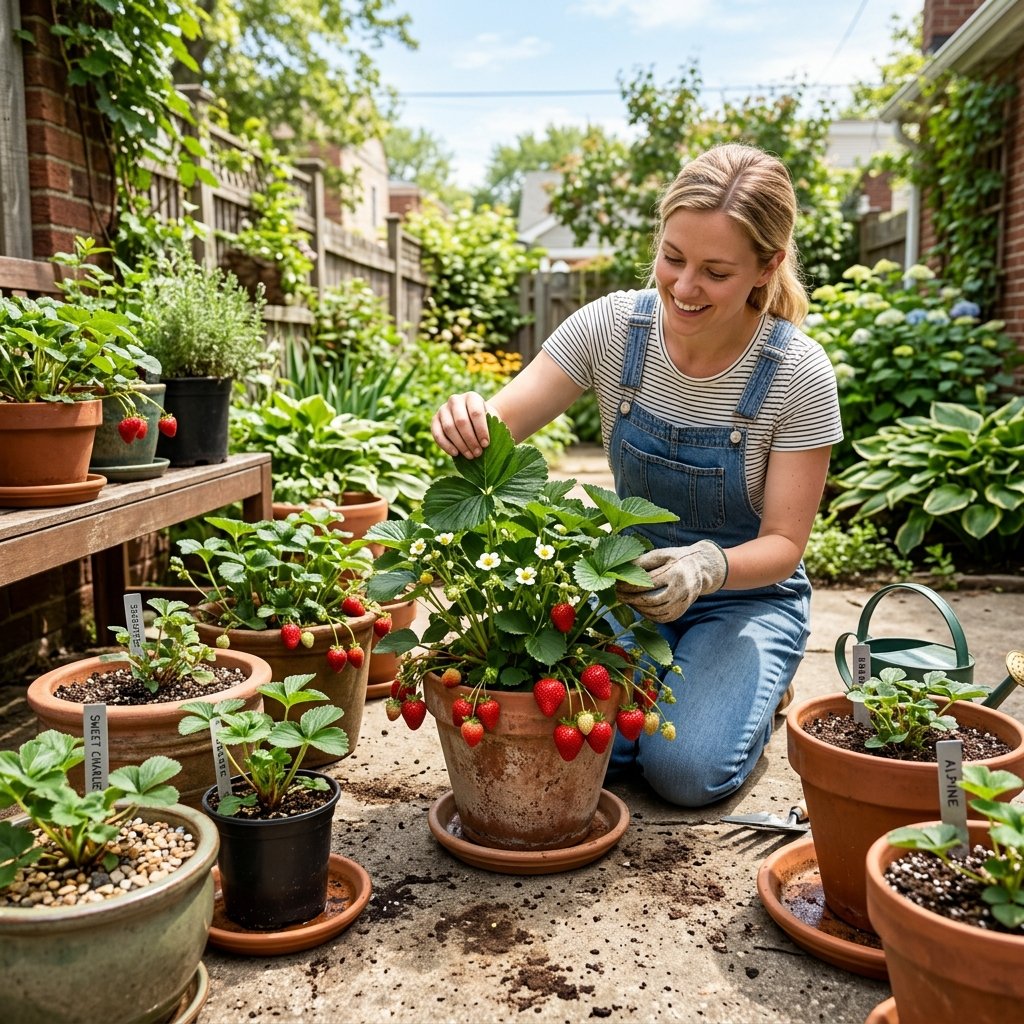
Growing strawberries in containers gives you a separate root zone that you can fill with an appropriate potting mix, monitor closely, and replace without relying on unknown in-ground soil. This control makes plants easier to inspect, but it does not make them pest-proof.
The main advantage is access: you can check drainage, spacing, leaves, flowers, and fruit before small problems spread. You can also move a container away from diseased plants or position it where sunlight is easier to manage. Start with healthy soil and good drainage, then check moisture, foliage, and pests regularly. These measures improve your odds, but insects, birds, diseases, heat, and watering mistakes can still affect the crop.
Growing Strawberries in Containers: What You Can—and Cannot—Control
Once drainage is set up and you have a routine for checking moisture, foliage, and pests, keep the limits of container growing in mind. A pot gives you control over the growing environment, but it cannot guarantee pest-free strawberries. You choose the container, growing medium, drainage, spacing, and placement; moisture stress, disease symptoms, and pests still require regular observation.
A separate root zone is the soil-control advantage
The main advantage is a defined root zone. Each plant starts in a selected growing medium instead of inheriting the conditions of an entire garden bed. You can adjust the container, keep the crown at the medium’s surface, and inspect the planting area without disturbing nearby crops. Oregon State Extension advises against using garden soil alone in pots because its fine texture can restrict drainage and aeration. Its container-planting guidance also advises against adding a gravel layer beneath the medium.
This setup functions like a small test plot. If one plant struggles, you can isolate it and examine its growing medium without treating or digging up an entire bed. For another example of separating the root environment from garden soil, see How Growing Potatoes in Containers Helps You Control Soil.
Control is useful only if you check the plants
A movable, visible pot makes regular checks easier, but it does not prevent problems. Examine the leaves, crown—the short central stem where the roots and leaves meet—and soil surface. Check for wilt, discoloration, damaged fruit, unusual spots, and pests as part of a regular monitoring routine before deciding what action to take.
- You can control: the container, growing medium, drainage, plant spacing, container placement, and inspection routine.
- You still need to monitor: moisture stress, disease symptoms, and pest presence.
Start With a Container That Supports Healthy Roots
A suitable pot gives strawberry roots enough space while keeping the planting easy to monitor. Begin by checking the container’s depth, diameter, and drainage, then select a cultivar that performs well in a container.
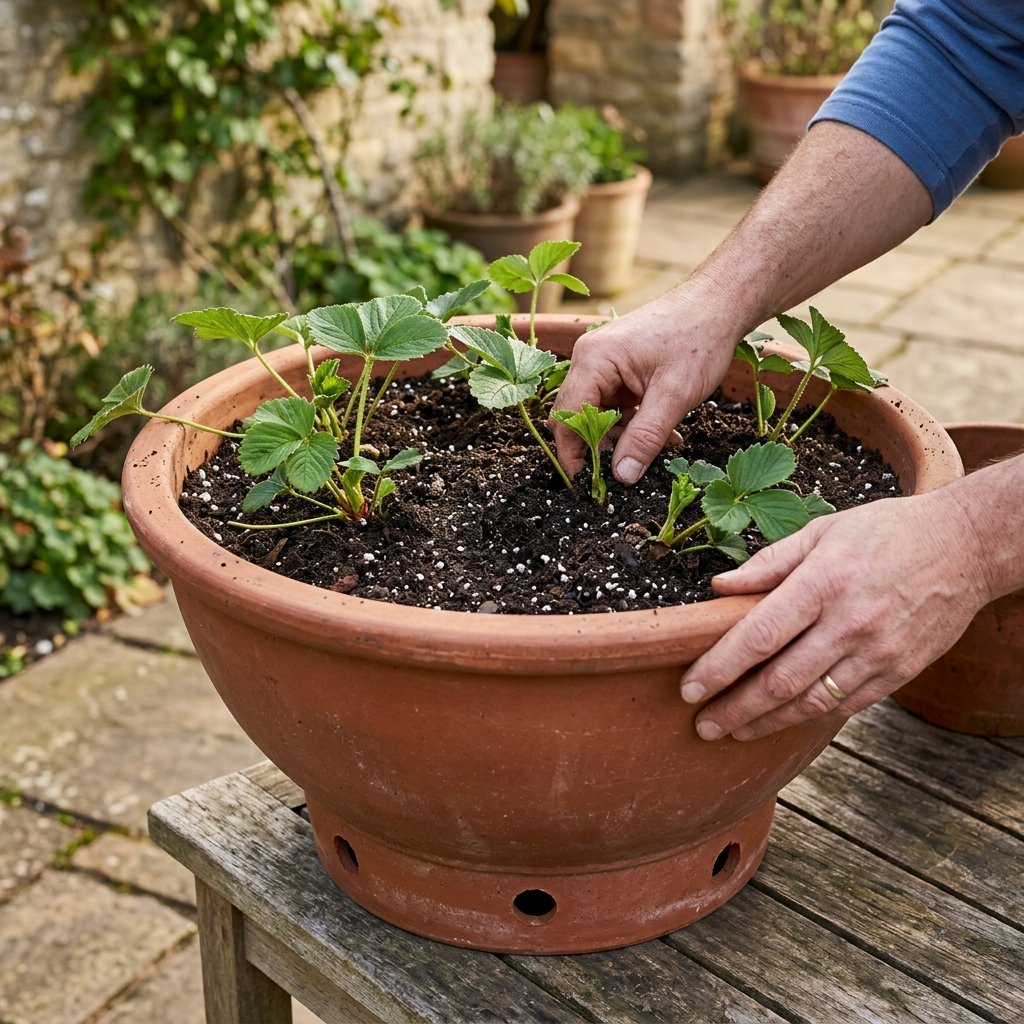
Use the documented size range before choosing a decorative planter
Oregon State University Extension recommends containers 10–18 inches deep and at least 12 inches in diameter for strawberries. Its guidance also states that a 12-inch pot can hold up to four plants.
“Up to” sets a capacity limit; it does not mean every pot should be filled to that limit. For a first planting, one strawberry plant—or a sparse arrangement—in a 12-inch container leaves the crown and foliage easier to inspect. Before considering a decorative planter, pot, or vertical system, confirm that it provides the required root space and has open drainage holes. For broader crop-by-crop sizing ideas, see What is Container Gardening? 5 Proven Benefits.
| Container choice | Documented guidance | Beginner decision |
|---|---|---|
| 12-inch pot | Up to four plants, according to OSU Extension | Use fewer if easy observation matters most |
| Other planters | 10–18 inches deep and at least 12 inches in diameter | Verify dimensions and drainage holes |
Choose a cultivar suited to container growing
OSU Extension identifies day-neutral strawberries as the best choice for containers. Day-neutral plants depend less on day length to initiate flowers than June-bearing types. The label describes their flowering habit, not a promise of continuous fruit.
For a straightforward setup, plant one day-neutral strawberry in a 12-inch pot and leave enough open space to see the crown, leaves, and soil surface. This spacing makes routine inspection easier without treating the pot’s maximum capacity as a planting target. Choose the cultivar for its suitability to container growing, not simply because its label complements a decorative planter.
Build a Soil Setup You Can Monitor and Refresh
A container lets you choose a growing medium deliberately, monitor its moisture, and correct problems in one defined root zone rather than guessing across an entire garden. A pot does not guarantee better soil quality, but it makes problems easier to find and address.
Treat each pot as one manageable growing environment
Each pot functions as a separate growing environment. Fill it with a suitable container medium at planting, then observe how quickly water drains and how long the surface stays moist. Oregon State Extension advises against using garden soil alone in containers because its fine texture can limit drainage and aeration. It also advises against placing a gravel layer beneath the medium.
This defined volume supports a practical workflow: notice, inspect, adjust. If one pot stays wet or dries unusually quickly, examine that pot’s medium, drainage holes, and position before changing the watering routine for every plant.
- Notice: record whether the surface stays wet, dries rapidly, or develops standing water.
- Inspect: check the drainage openings and examine the medium around the roots.
- Adjust: correct that pot’s placement or watering pattern, and refresh the medium when the evidence supports it.
For crop-by-crop growing guidance, see this guide to soil and container guidance from Oregon State Extension, or explore our article on growing potatoes in containers.
Avoid treating every yellow leaf as a fertilizer problem
A yellow leaf is a symptom, not a diagnosis. Check moisture and drainage first, then look for visible damage on the leaves, fruit, and crown. Change fertilizer or other inputs only after those checks; the available guidance does not support one universal amendment for every yellowing plant.
Soil testing applies most directly to native garden soil or a selected soil source. Manage purchased container medium by following its label and observing its drainage behavior, moisture pattern, and the plant’s response. Make one evidence-based change at a time so the pot can show whether the adjustment helped.
Use Placement and Routine Care to Catch Pest Problems Earlier
Place containers where every plant is visible and easy to reach. That makes it easier to spot a change, inspect the affected plant, and act before a problem spreads. Pots do not make strawberries pest-proof, but they can reduce the time between noticing a symptom and consulting reliable treatment guidance.
Put pots where care is easy to repeat
Set containers along a route you use regularly instead of tucking them behind taller plants or furniture. Leave enough room to inspect the undersides of leaves, reach the fruit, and separate a pot if its symptoms are concerning.
Good visibility also makes watering and fertilizing more consistent. Iowa State Extension recommends watering when the soil surface is dry, which may mean daily watering or twice-daily watering during summer heat. Follow the same source’s label-based fertilizer guidance rather than adding more product when growth looks weak. On a balcony, wind, heat, pests, and runoff can alter the routine, so use this site’s guide to gardening on a small balcony when working within those placement constraints.
Pair watering with a quick scouting habit
Use each watering session as a reminder to inspect the plants. Before adding water, feel the growing medium and check whether its surface is dry. Examine the leaves, crown area, and fruit for damaged tissue, unusual marks, or fruit that is deteriorating.
- Check each plant, not only the healthiest-looking one.
- Record any new or worsening change, especially after watering or fertilizing.
- Remove clearly diseased foliage or fruit as Iowa State Extension advises.
- Move a concerning plant away from its neighbors while you confirm its identification and the next step with local extension guidance.
This inspection is not a diagnosis. Use reliable local extension advice to identify the problem and choose a treatment.
Know When a Container Is Not the Complete Solution
A container defines the root zone and makes inspection easier, but it does not eliminate pests or reveal the cause of every decline. Persistent damage, unusual growth, or spreading disease symptoms call for careful identification rather than guesswork.
Escalate persistent or unclear problems instead of guessing
If a strawberry plant continues to decline after you check moisture, drainage, leaves, crown, and fruit, isolate the pot when feasible. Take dated photographs and record recent watering, fertilizing, weather, and visible changes. This record gives an Extension service or local horticulture adviser more useful information than a vague description.
Seek local guidance before applying any treatment, especially if the cause remains unclear or symptoms spread to other pots. Reliable recommendations can vary by region, pest, disease, and crop stage. Pausing is safer than applying a product aimed at the wrong problem.
- Isolate a concerning pot if practical.
- Document symptoms with photographs and notes.
- Contact a local Extension service when reliable guidance does not identify the issue.
Use the container advantage without overpromising
The main advantage is control, not complete exclusion. You can inspect one plant closely, compare its growing medium with that of a healthy pot, and move or separate it during routine container maintenance. A separate pot functions like a small experiment on its own workbench: changes are easier to observe, but the outcome still depends on light, water, temperature, plant health, and regular care.
For broader context on the value of a separate growing space, see What is Container Gardening? 5 Proven Benefits. Treat the pot as a monitoring tool, not a guarantee. Correct plant identification, source-supported watering and fertilizing decisions, and an appropriate response to persistent symptoms remain essential.
Conclusion
Growing strawberries in containers gives you useful control, but it does not guarantee a pest-free crop. The best setup combines a properly sized, well-draining pot with a day-neutral cultivar suited to containers. Regularly check the root zone and the plant so you can address problems early.
Oregon State University Extension identifies day-neutral cultivars as especially suitable for pots. Begin with one well-chosen container and establish a simple routine for checking moisture, leaves, crowns, and fruit. Consistent observations make problems easier to isolate and address before they spread. If the cause remains unclear, document the changes and seek local Extension guidance instead of treating by guesswork.