
Introduction
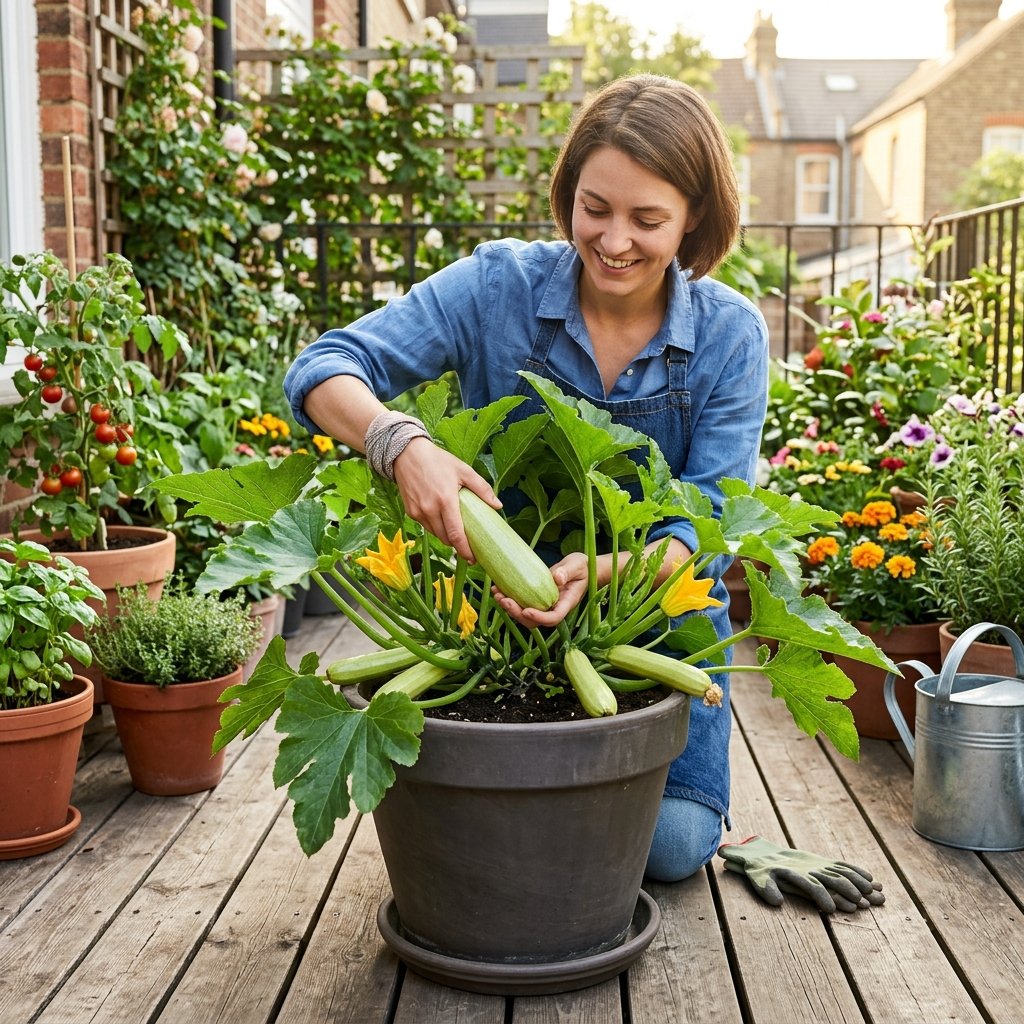
Growing zucchini in containers is practical on a sunny patio, deck, or small garden space, as long as each plant has sufficient root room and consistent care. A compact variety grown in a properly sized container can produce fresh squash without an in-ground bed. Related: Enjoy Bigger Harvests by Growing Cucumbers in Containers on a Small Patio.
For beginners, the key decisions are simple: select a container-friendly variety, give each plant its own pot, and keep up with watering and feeding as the plant grows. Zucchini needs at least six hours of full sun each day, according to University of Wisconsin–Madison Extension guidance. Monitor the flowers and leaves as well. Poor pollination can prevent fruit from developing, while crowded, damp foliage can encourage disease.
Plan the Space Needed for Growing Zucchini in Containers
A zucchini plant can grow in a pot, but it is not automatically a small-space crop. Colorado State University Extension recommends one plant per 5-gallon container, with at least 8 inches of container depth and a roughly 36 by 36 inch footprint. These requirements are especially relevant on a patio, where growing zucchini in containers can quickly crowd nearby plants.
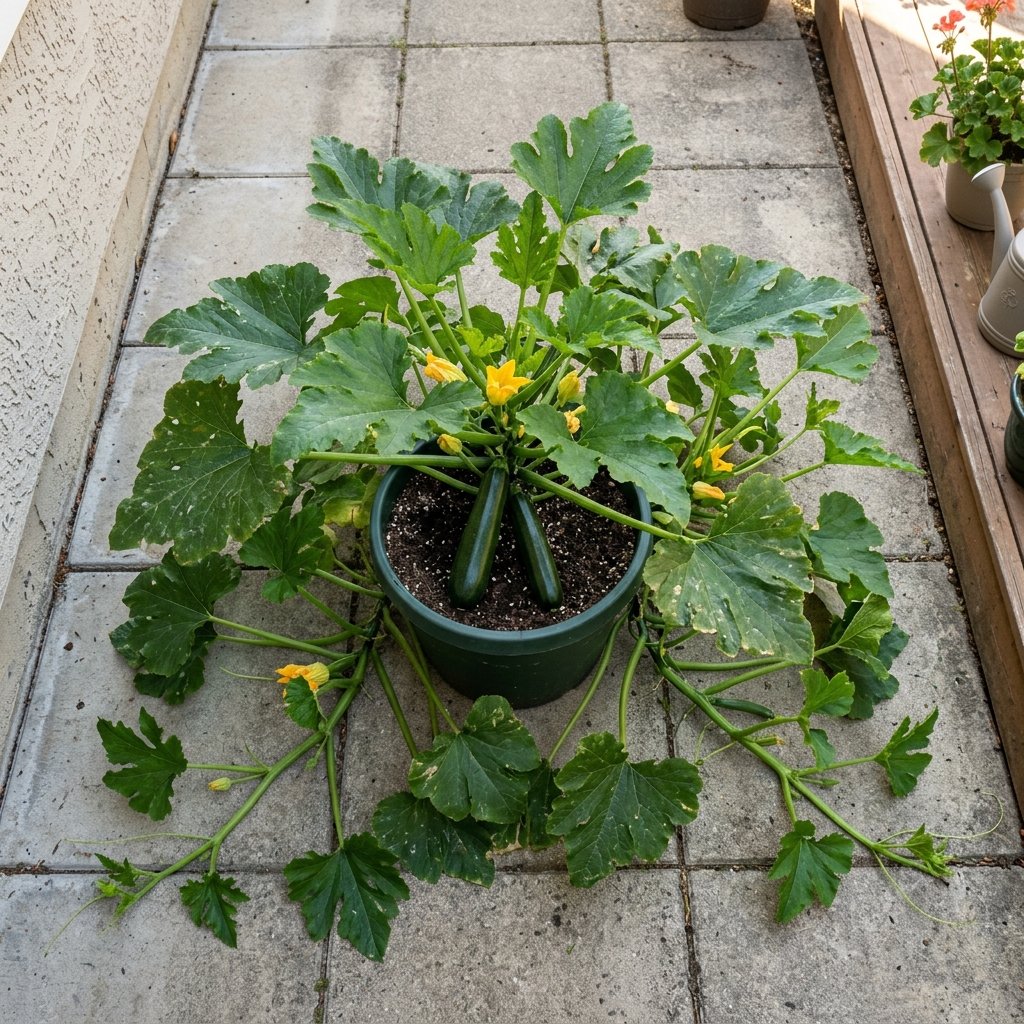
The footprint is the floor area the plant needs to spread without crowding neighboring pots. Give each plant its own full-sized zone instead of grouping several zucchini plants together. A 5-gallon container supplies adequate root space, but it will not keep the leaves and stems compact.
Choose a compact plant, not just a smaller pot
Look for “compact” or “container-suited” on seed packets or transplant labels. Colorado State University Extension identifies compact varieties as better choices for containers, but the right variety does not replace adequate volume or spacing. Related: Growing Tomatoes in Containers Gives Beginners a Head Start in Small Spaces.
Use this quick check before buying supplies:
- Choose one plant: keep to one plant per container.
- Check the pot: provide at least a 5-gallon container with 8 inches of depth.
- Measure the site: allow a 36 by 36 inch footprint for the plant, not only the pot.
- Reconsider the location: if that full zone would block a walkway or crowd other containers, choose a more compact crop instead.
Set Up the Right Container Before You Plant
Choose a sturdy container large enough for one plant, with clear drainage holes and a quality potting mix. Colorado State University Extension recommends one plant in a 5-gallon container with at least 8 inches of depth. The container material may vary, but it must support both the plant and the growing medium.
- Check the container. Make sure water can escape freely through the drainage holes. Without adequate drainage, the root zone can remain saturated. Adding gravel or stones underneath does not improve drainage, according to University of Maryland Extension guidance.
- Choose the growing medium. Use a commercial potting mix made for containers rather than soil dug from a garden bed. Garden soil can become dense, drain poorly, and restrict roots in a pot. Potting mix provides a lightweight, breathable environment for the root zone.
- Plan support early. If your chosen variety needs plant support, decide where to install it before the container fills with roots and becomes difficult to rearrange. Follow the variety’s instructions instead of assuming every zucchini needs the same structure.
- Fill it in place. Set the empty container in its final location before adding mix. Once filled and watered, even a modest pot can be awkward and heavy to move.
Put the container where you can monitor it easily
Place the pot where you can inspect it regularly, such as beside a patio path rather than behind stored furniture. Easy access makes it easier to spot dry mix, new flowers, developing fruit, insect damage, or sudden leaf changes before a small problem sets the plant back.
Choose an outdoor location that provides the light your selected variety needs under your local conditions. A sunny window does not automatically provide the same conditions as an outdoor vegetable-growing site. The broader benefits of this flexible approach are covered in What is Container Gardening? 5 Proven Benefits.
Plant Zucchini at the Right Time and Give It a Strong Start
After choosing a container, wait to plant zucchini until the local frost risk has passed and the soil is warm enough for this warm-season crop. Use planting guidance for your area rather than relying on a calendar date suited to a different climate.
Use local conditions instead of copying an online planting date
Zucchini follows the same general timing as summer squash, so consult a planting calendar from your local Extension service. Oregon State University reports that zucchini seeds need soil of at least 60°F to germinate, with 70–95°F described as the optimum range. Treat these figures as a temperature guide, not a nationwide planting schedule.
Balcony gardeners can compare this approach with gardening at apartment balcony: 7 Best Expert Tips, while still giving priority to local frost dates and the actual temperature of the container mix. A sheltered balcony may warm quickly, but a late cold snap can still damage young plants.
Choose one of two straightforward ways to start:
- Seeds: Sow directly into the prepared container when local conditions are suitable. Follow the packet directions for planting depth and spacing, then keep the mix evenly moist as the seeds establish.
- Transplants: Buy a healthy young zucchini plant and move it into the container once outdoor conditions are suitable. Handle the root ball gently, and keep the plant at the same depth at which it was growing.
Whichever route you choose, keep only one plant per container. Several seedlings may look promising at first, but sharing one container forces them to compete for water, nutrients, and root space.
Build a Simple Care Routine for Water, Nutrients, and Airflow
Once each container holds one plant, care should follow what you observe rather than a fixed calendar. Check the potting mix, leaves, and developing fruit regularly, then adjust watering, fertilizer, and spacing as weather and growth change.
- Watering: Iowa State University Extension recommends watering until water flows from the drainage holes without allowing the potting mix to dry completely. Heat, a larger plant, and a heavy fruit load can increase water demand, so check the mix before watering instead of following someone else’s schedule. See Iowa State’s container-care guidance.
- Fertilizer: Follow the product label and guidance from a trusted local source for the application rate and interval. Recommendations vary: Iowa State gives a one-to-three-week range for water-soluble fertilizer, while the University of Maine describes applying a balanced fertilizer every other week in summer. Pale leaves do not automatically mean the plant needs more fertilizer, so check for other causes before increasing feeding.
- Air circulation: Keep leaves from resting against walls or becoming crowded by nearby plants. Good airflow helps reduce the conditions associated with powdery mildew, a white, powder-like growth that can affect cucurbits.
Avoid treating every yellow leaf as the same problem
Pause before diagnosing the cause. Determine whether yellowing affects older leaves or newer growth, and inspect both sides of the leaves for pests or powdery growth. Check the container’s drainage as well, along with whether the potting mix has remained excessively wet or dried out completely.
A single pale or spotted leaf is not enough to establish a diagnosis. If symptoms spread, affect developing fruit, or remain unclear after these checks, consult a local Extension resource for identification and treatment guidance. Cornell’s powdery mildew factsheet describes cucurbit symptoms and favorable conditions, but not every leaf problem is powdery mildew.
Know What Flowers, Rotting Fruit, and Harvest Timing Are Telling You
Once you have checked the leaves for disease, pay attention to the plant’s other signals. Flowers without zucchini usually indicate a pollination or timing problem, while young squash that shrivels or rots has a different cause. Identifying the symptom first helps you respond appropriately instead of adding fertilizer or water at random.
When flowers appear but zucchini does not
Flowers alone do not guarantee fruit set, the successful start of a squash fruit. Male flowers produce pollen, while female flowers have a small swelling beneath the petals that can develop into zucchini. The University of Maryland reports that male flowers commonly appear one to two weeks earlier.
If female flowers appear but do not enlarge, rainy weather or limited insect activity may be interfering with pollination. The University of New Hampshire Extension guide explains that squash flowers open early and remain viable for only one day. It also outlines how to hand-pollinate in the early morning with a small paintbrush or a male flower.
When young squash shrivels or rots
A tiny fruit that turns yellow, shrivels, or drops may have been poorly pollinated rather than infected with a disease. A developing squash with a dark, sunken end may have blossom-end rot. N.C. Cooperative Extension identifies consistent moisture as the most important preventive measure, while available guidance does not support treating every case as a calcium problem.
When to pick summer squash
Inspect the plant regularly once fruiting begins. The University of Maryland Extension recommends harvesting elongated zucchini at 6–8 inches long and 1½–2 inches in diameter. Use the maturity guidance for your selected variety when planning your summer squash harvest rather than waiting for oversized fruit.
Conclusion
After harvesting summer squash at the recommended size, you can continue growing zucchini in containers with a few consistent habits. Plan for the mature plant, not just the pot: one compact plant, sufficient space for its full footprint, and regular checks often matter more than elaborate equipment.
If your space lacks adequate sunlight, airflow, or room for the plant to spread, adjust your plans or choose another crop. Otherwise, select a suitable container, plant at the locally recommended time, and inspect the plant regularly for moisture needs, flowers, fruit set, and changes in the leaves.
Use local Extension guidance for regional planting times or persistent pest and disease symptoms. Then expand your edible patio garden with a container cucumber guide, tomato guide, or small balcony gardening guide.